Guides / Logistics
Tracking a Cashew Kernel Order: Milestones, Evidence and Signs of a Slip
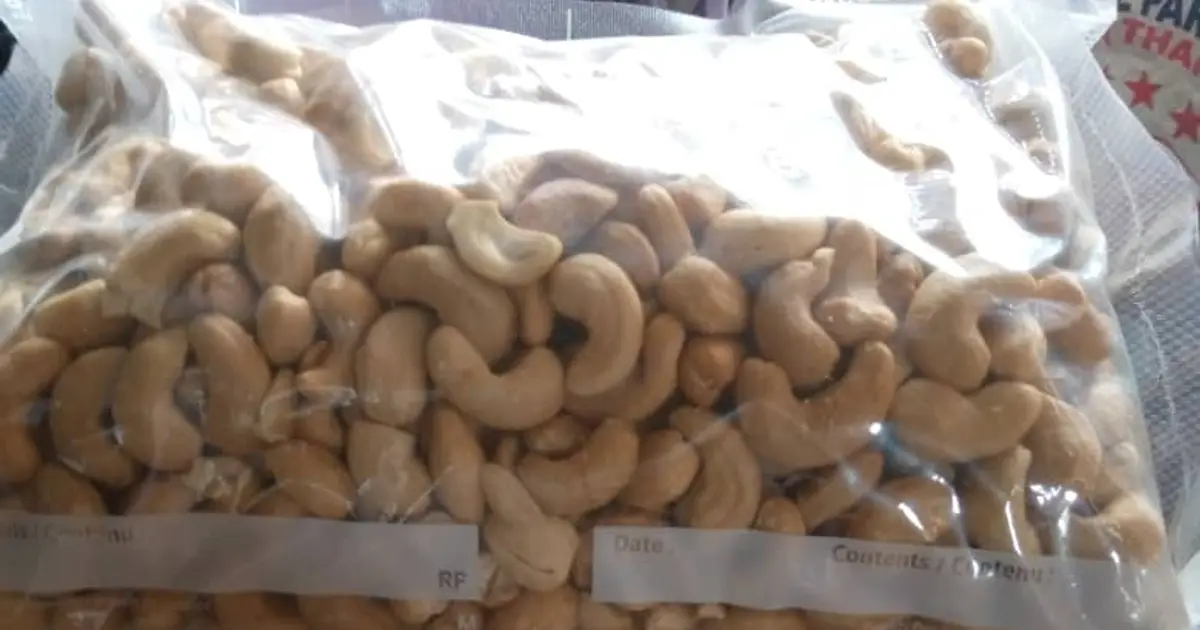
A signed cashew kernel contract fixes a shipment month, and the processor then has to line up raw nuts, a production slot, packing, a sample, an inspection and a container before that month ends. Slips are rarely announced. They show up as a sentence like “we are packing next week” repeated twice. This guide gives you a milestone list for the period between signature and sailing, the evidence to ask for at each step and the signs that the month will not hold.
Why cashew shipment dates slip
The kernels you buy start as raw nuts, and most of those are imported. A January 2026 report quoting VINACAS says domestic raw nuts meet only about 10% of Vietnamese demand, so a processor’s raw nut position depends on cargoes landing and clearing, not just on a local harvest. If the nuts for your lot are not yet in the yard when the contract is signed, everything after that waits.
Behind raw nuts, the usual queue points are:
- Grading. Whole kernels are sized and sorted before the lot code is known. Pieces come from broken kernels, so a pieces lot cannot be closed until the whole lots are graded.
- Sampling and approval. The pre-shipment sample, its courier time and your own sign-off sit on the critical path. Our guide to the cashew sample and approval process shows where the weeks go.
- Treatment and inspection. Anything that needs a record, a certificate or an inspector adds a date you do not control.
- Booking. A container slot has a cut-off. Miss it and the next sailing sets your date. See typical transit times from Vietnam for the sailing side.
What the contract says about late shipment
Your own contract rules. For orientation, the AFI Standard Import Contract (a general food import form, last revised 21 September 2020, not a cashew specific document) says:
- Immediate shipment means within 10 days of the contract date and prompt shipment within 21 days.
- If the seller cannot ship because of the events listed in the liability paragraph (fire, strike, boycott, flood, earthquake, windstorm, war, riot, revolution, government restriction or prohibition), the seller must notify the buyer at once and the shipping period extends automatically by one month. If the seller still misses that period, notice is due within the following five days.
- A buyer who intends to claim damages must present an itemised written statement immediately.
- The contract can be cancelled or modified only in writing signed by all parties.
Two things follow. A processor who is late for ordinary reasons, such as raw nut cover or a full production line, is not inside the listed events, so ask what your contract says about those. And any new shipment date should be agreed in writing, not in a chat message.
The milestones of a kernel contract
The table follows the normal order of events for a container of kernels. Not every contract needs every row. Ask for the evidence in the second column; the fourth column tells you what to do when it does not arrive.
| Milestone | Evidence to request | Place in the normal order | Warning sign |
|---|---|---|---|
| 1. Contract and written spec signed | Contract with grade, count range, pack, shipment period and the named spec document (for example the AFI Specifications for Cashew Kernels, September 2023) | First. Everything else hangs on it | Spec or pack still “to be agreed” after signature |
| 2. Raw nut cover | Written confirmation that raw nuts for your volume are bought, their origin, and the processor’s own outturn result for that nut lot (pounds of kernel per 80 kg bag) | Before the production slot is booked | “Buying this week”; no outturn result; origin changes without notice |
| 3. Whole lots: W320, W240 and others | Lot numbers; grading sheet showing the whole kernel count in a one pound (454 g) composite sample; photos of the graded lot | After raw nut cover, before packing | Count sitting at the edge of the range; two lots merged under one code |
| 4. Pieces lots | Sieve result by piece grade (AFI sizes pieces on square-opening wire mesh sieves); photo of the lot | After the whole lots are graded | Pieces described as “mixed” with no sieve data |
| 5. Packing: vacuum tins or CO2 flushed cartons | Photos of tins or cartons with markings; draft packing list with lot, production and date codes and quantities; gas mix stated (AFI: food grade CO2 at a minimum of 60%, balance nitrogen) | After grading, before the sample is drawn | Cartons without lot codes; packing list with totals only |
| 6. Pre-shipment sample | Two sealed samples sent to you, drawn to a plan (AFI Appendix I: 3, 6, 13 or 21 cartons depending on lot size); AFI notes that one stays sealed for a dispute | After packing, before inspection sign-off | Sample drawn before the lot was packed; “sending next week” more than once |
| 7. Inspection before loading | Inspection report with date, inspector and the lots covered (AFI: all shipments shall be inspected prior to loading) | Immediately before stuffing | Inspection planned after the container has already left the plant |
| 8. Fumigation or other treatment, if used | Treatment record with date, product, dose, exposure and aeration time; AFI prohibits methyl bromide and allows only chemicals approved in the receiving country | Before stuffing; record in hand before the vessel sails | Undated record; treatment done but aeration time not stated |
| 9. Phytosanitary certificate, only if required | Certificate or draft with issue date and consignment details matching the packing list | Close to stuffing; some importing countries set a time limit between issue and dispatch (ISPM 12) | Issued long before the lot was packed; details do not match the lot codes |
| 10. Container stuffing and booking | Booking number and cut-off date; photos of the empty container, loading and sealed doors; seal number | After inspection and treatment | No booking confirmation close to the cut-off |
| 11. Sailing and documents | Draft bill of lading, invoice and packing list that agree with each other; certificate of analysis per lot; for US bound cargo, the name of whoever files prior notice | At sailing | Draft documents change lots or weights; nobody named for prior notice |
Need a price for this grade? Request a quote
What to ask at each milestone
Keep the request short and always the same, so it does not feel like an audit. One line per milestone is enough:
Subject: Contract [no.] W320 - milestone update

Please confirm by [date]:
1. Raw nut cover: bought / not yet bought, origin, outturn result
2. Lots allocated to our order: lot numbers
3. Packing date and photo of cartons with lot codes
4. Pre-shipment sample: courier and tracking number
5. Inspection date and inspector
6. Treatment record (if any)
7. Booking number and cut-off date
Three notes on the evidence itself.
Lot numbers tie everything together. The AFI specification asks for lot, production and date codes on the cartons and a packing list that lists them with quantities, for traceability and representative sampling. If the lot codes in the photo, the sample, the inspection report and the draft packing list do not match, you have found a problem while it is still cheap.
Treatment records matter more than certificates. If the plant treats cashew kernels, you want the product, dose and aeration time, because residue limits depend on the destination.
Phytosanitary paper is optional until it is not. ISPM 12 says importing countries should not require phytosanitary certificates for products processed to the point where they have no potential for introducing regulated pests. Kernels are processed, so a destination may not ask for one. Confirm it for yours and write the answer into the contract.
For US bound cargo, prior notice of the shipment has to reach FDA no less than 8 hours before arrival at the port when the food arrives by water (21 CFR 1.279). Agree in advance who files it and who holds the confirmation number.
Signs your shipment month will slip
None of these proves a slip. Two or three together mean you should ask for a revised plan now rather than at the cut-off.
- The production start date has moved twice.
- The raw nut answer has not changed from “buying soon”.
- The processor asks to change the pack, the count range or the colour class after signature.
- The sample is promised but has no courier number.
- The lot codes you receive for photos differ from those on the draft packing list.
- A partial shipment is suggested for the first time. The AFI contract treats shipments as severable where a right to partial shipment exists, so check whether yours gives that right.
- Replies get shorter and slower as the cut-off approaches.
Agreeing a revised date in writing
When the date has to move, ask for a short written amendment instead of an email thread. The AFI contract wording is a useful reminder: modifications in writing, signed by all parties. Your amendment should state:
Contract [no.] is amended as follows.
New shipment period: [dates]
Reason given by seller: [raw nut cover / production / booking]
Spec, quantity and price: unchanged
Affected documents: [letter of credit latest shipment date,
  insurance, prior notice, delivery slot at your warehouse]
Signed: buyer [name, date]  seller [name, date]
Check the affected documents before you sign. If a letter of credit or an insurance cover carries a latest shipment date, it needs its own amendment.
A tracking checklist to copy
Paste this into a sheet and fill it from the first day.
Milestone | Planned | Confirmed | Evidence received (Y/N, file) | Warning sign seen
Contract and spec signed |
Raw nut cover |
Whole lots graded (lot numbers) |
Pieces lots sieved |
Packed (lot codes on cartons) |
Pre-shipment sample sent / approved |
Inspection report |
Treatment record (if used) |
Phytosanitary certificate (if required) |
Booking and cut-off |
Stuffed and sealed (seal number) |
Sailed (bill of lading) |
Prior notice filed (US bound) |
When you write your requirement on the RFQ form, put the shipment month and the evidence you expect into it. Processors that run your grade and volume can then tell you up front whether they can meet it.
Sources
- AFI, Standard Import Contract (revised 21 September 2020), paragraphs 2, 3, 4 and 13
- AFI, Specifications for Cashew Kernels (updated September 2023)
- 21 CFR 1.279, prior notice submission timing (Cornell LII)
- IPPC, ISPM 12, Phytosanitary certificates (2014 edition)
- VINACAS, Specifications for Dried Raw Cashew Nuts in Shell (TCCS 2016/HDT/VINACAS)
- antidumping.vn, Cashew paradox: Viet Nam exports soar, but imports hit record high (16 January 2026)
Frequently asked questions
How do I track a cashew order from a Vietnamese processor?
Write the milestones into the contract or the order confirmation, then ask for one piece of evidence at each: raw nut cover, lot numbers, a packing photo with lot codes, a sealed pre-shipment sample, an inspection report, a treatment record and a container booking. A missing piece of evidence is the early warning.
When does a late cashew shipment become a contract problem?
It depends on your contract. The AFI standard import contract, a general food import form, defines immediate shipment as within 10 days and prompt shipment as within 21 days of the contract date, and it extends the period by one month only for listed events such as fire, strike or government restriction, with notice to the buyer. Check what your own contract says.
Do I need a phytosanitary certificate for cashew kernels?
Only if the importing country or your contract asks for one. The international standard on phytosanitary certificates says importing countries should not require them for products processed to the point where they pose no pest risk. Ask your customs broker, and write the answer into the contract either way.
What should I ask for before a cashew container is loaded?
A draft packing list with lot, production and date codes, the pre-shipment sample result, the inspection report, any fumigation record, the booking number with its cut-off date and photos of the container being loaded and sealed. The AFI cashew specification asks for inspection before loading and for lot codes on the packing list.
VietCashew supplies Vietnamese cashew kernels on one quote. We publish no prices, because a cashew quote is only valid for days. How an order runs and what we publish.
Need a price for this grade?
Send the requirement. We reply within 24 business hours with one detailed quote for the packed kernels.
Request a quote