Guides / Sourcing
Cashew Pieces as an Ingredient: Matching Piece Size to Bakery, Chocolate and Ice Cream
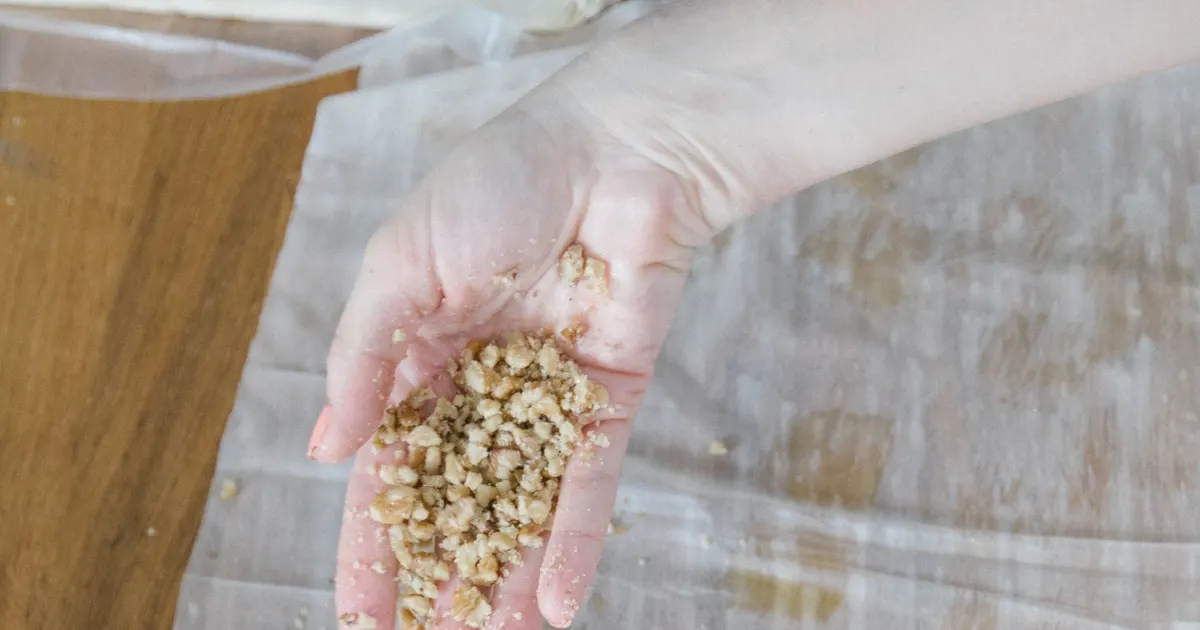
When a cashew ends up in a cookie, a chocolate bar or a tub of ice cream, nobody asks whether it was a whole kernel once. Pieces are the logical buy for these makers. They cost less, they blend into the recipe and the exact shape is invisible. What matters instead is size, toast, dryness and cleanliness, and those are the fields a baker or a chocolate maker should control in the spec.
This guide explains how to match the piece grade to the product, what to check in the ingredient and where the usual failures happen.
The piece grades in short
Pieces are kernel fragments from breakage in shelling and peeling, sorted by size. Our guide to cashew pieces covers the names. In short: splits are cleanly separated halves, butts are kernels broken across the grain, large white pieces are fragments larger than about half a kernel, small white pieces are smaller than half a kernel and baby bits are the smallest graded fragments.
Piece sizes are not standardised across plants the way whole grades are. Whole grades are pinned to a count per pound, but pieces are pinned to screen sizes each facility sets. That means “LWP” from two processors may differ in actual size, so ask for the screen aperture in millimetres, both the pass and the retain.
Match the piece to the product
Cookies, brittle and toppings. A visible crunch calls for large white pieces. They show as distinct nuggets, give texture and look natural on top of a bar or cookie.
Chocolate bars and inclusions. Small white pieces, usually toasted, distribute evenly through the chocolate and do not cause hard bites. Chocolate makers also care about moisture and fat, since both affect how the bar sets and bloom.
Ice cream. Small pieces or baby bits survive churning and freezing and spread through the product. Many makers coat or toast the pieces so they stay crisp in the cold.
Fillings, pastes and spreads. Baby bits suit milling, because the kernel is ground anyway.
Cereal and granola. Small white pieces blend with oats and binder, and a toast adds depth.
Cakes and batters. Small pieces mix into the batter without sinking or clumping.
Pieces by finished product
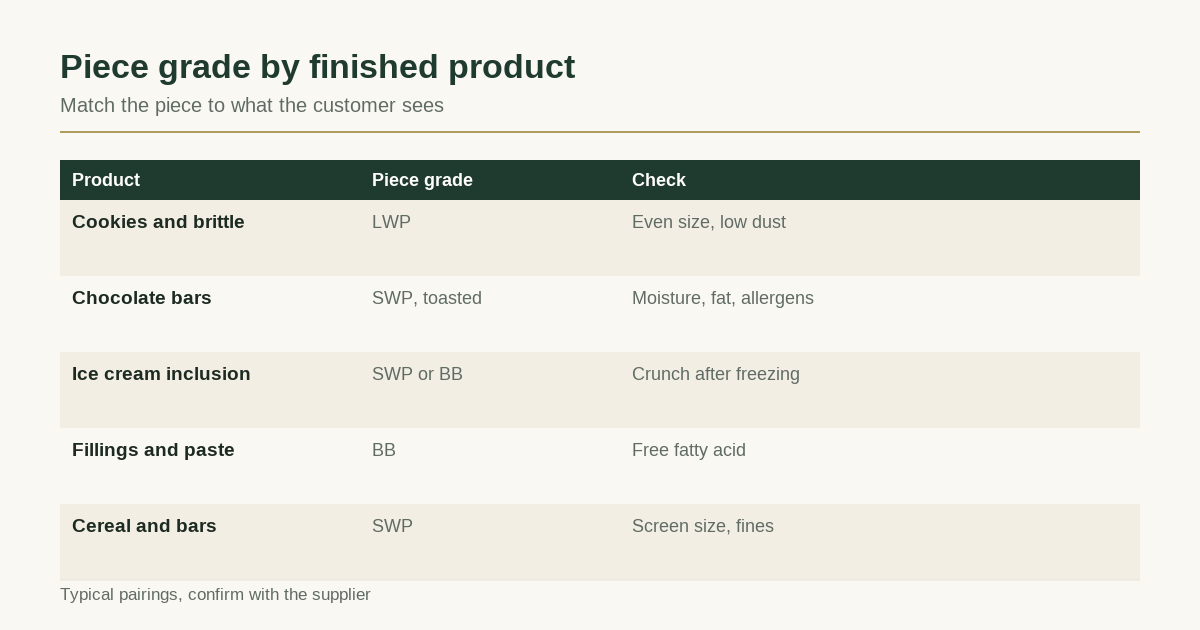
| Product | Piece grade | What to check |
|---|---|---|
| Cookies and brittle | LWP | Even size, low dust |
| Chocolate bars | SWP, toasted | Moisture, fat, allergens |
| Ice cream inclusion | SWP or BB | Crunch after freezing |
| Fillings and paste | BB | Free fatty acid |
| Cereal and bars | SWP | Screen size, fines |
Toasting
Toasting develops flavour and crispness. A raw cashew piece tastes mild and a little sweet, and a toasted one tastes nuttier and holds its crunch longer in a wet product. Bakers often toast in their own ovens so the colour matches the bake, with a typical window of minutes at a moderate oven temperature that depends on piece size and oven. Start with a low temperature and judge by cutting a piece: the centre should be pale gold, not raw white.
Pre-roasted pieces save a step and give consistency, but they cost more and have a shorter shelf life than raw. Our guide to roasted cashews from Vietnam covers buying roasted kernels.
Moisture, fat and migration
Dry pieces stay crisp. Moisture is the enemy, both in the piece and around it. Chocolate and ice cream are fat-based or frozen systems where water in the piece can migrate and soften the nut, and fat from the nut can migrate into chocolate and soften the bar or cause bloom, a pale film on the surface. A thin fat coating on the piece can slow the exchange. Test the finished product across its whole shelf life, not only on the day it is made.
Set a moisture limit in the spec, and ask for readings from the lot. Our guide to moisture, storage and shelf life explains the limits.
Fines and dust
Every piece grade carries some powder from screening. Fines can darken a batter, clog a depositor and leave a grey haze in chocolate. A tight fines limit costs more because it needs more screening passes. If your line blows or sifts, set the limit. If the pieces go straight into a grinder, do not pay for it.
Foreign matter, allergens and safety
Pieces are small, so shell and skin fragments are harder to spot. Check the foreign matter limits, and ask how the plant controls them. Our guide to foreign matter and metal detection lists the controls. If you run your own metal detector or sifter, set it up for the piece size you buy.
Cashew is an allergen and must be declared. Bakeries, chocolate plants and ice cream lines often handle several allergens, so your own cleaning and labelling rules apply. Ask the processor which allergens are handled in its plant, since that feeds into your risk assessment.
Need a price for this grade? Request a quote
Heat treatment and raw use
Many bakery uses involve baking, which provides a heat step. Ice cream and chocolate inclusions often do not, so the piece goes into the product raw or only lightly toasted. If there is no kill step in your process, ask the processor about its treatment and verification. Our guide to aflatoxin and food safety covers contamination limits.
What to put in the spec
- Piece grade and screen size in millimetres, pass and retain.
- Colour class: white, scorched or mixed.
- Moisture maximum and test method.
- Fines limit as a percentage by weight.
- Defect and foreign matter limits.
- Raw or pre-roasted, and the roast profile if roasted.
- Pack: 25 lb vacuum tin or flexi bag, sealed against moisture.
The spec sheet tool builds the document, and our guide to what to check on a cashew spec sheet lists the fields.
Common mistakes
Ordering by name alone. LWP from one plant can look different from another. Ask for screen sizes and a sample.
Skipping a shelf life test. Nuts that are crisp on the day can be soft after a month in a frozen or high-moisture product.
Ignoring fines. A load of dust can cause trouble on a depositor or in a mixer.
Questions to put to a processor
- What screen sizes do you run for LWP, SWP and BB?
- What fines level do you see by lot?
- Can you supply toasted pieces to my profile?
- What moisture do you pack at?
- Can you send counter samples of two piece sizes for a trial?
A bench trial for your product
Pick the product you want to change and bake or make a small batch with each candidate piece grade. Weigh the inclusion at the same percentage in each batch, so that only the piece size varies. Photograph a cut section of each result, since the distribution of pieces in the crumb, the bar or the scoop tells you more than a whole-product photo. Taste for crunch and flavour on day one, then repeat at the end of the intended shelf life.
For ice cream, hold samples at the temperature your customers will see, and note how the pieces feel after a freeze and thaw cycle if that is a risk. For chocolate, store a bar in a warm room for a week and look for bloom or softening near the nuts. For baked goods, check that the pieces do not burn on the surface or sink to the bottom of the batter. Record each result, because the same record helps you brief a processor on what you need.
Working with the processor on size
If none of the standard piece sizes suits your recipe, ask the processor whether it can screen to a custom range. Many plants can run a narrower cut for a standing order, though the minimum run may be higher. Give them your target in millimetres and the maximum fines you can accept, and ask for a counter sample before the first container. A short conversation about size at the start saves a failed batch later.
Next step
If you bake or make chocolate or ice cream, describe the product in the requirement: the piece size you want, raw or toasted and the volume. We price it with a Vietnamese processor that runs it, and you get one detailed quote. Send a requirement and we reply within 24 business hours.
Frequently asked questions
Which cashew piece grade is best for baking?
Large white pieces suit cookies, brittle and toppings where a visible crunch is wanted, and small white pieces suit batters, fillings and cereal. Pick the piece size that is visible but not dominant in the finished product, and confirm the screen size in millimetres.
Should bakers buy raw or roasted cashew pieces?
Many bakers toast the pieces themselves so the flavour is fresh and the colour matches the bake. Others buy pre-roasted pieces to save a step. Raw pieces give you control of the roast, and pre-roasted pieces give consistency, so test both in your own oven.
Why do cashew pieces go soft in ice cream and chocolate?
Moisture moves from the surrounding product into the nut, so crisp pieces turn soft over time. Use dry, toasted pieces, consider a thin fat coating as a barrier and test the product through its full shelf life.
VietCashew supplies Vietnamese cashew kernels on one quote. We publish no prices, because a cashew quote is only valid for days. How an order runs and what we publish.
Need a price for this grade?
Send the requirement. We reply within 24 business hours with one detailed quote for the packed kernels.
Request a quote