Guides / Sourcing
Visiting a Cashew Factory in Vietnam: A Walk-Through for Buyers
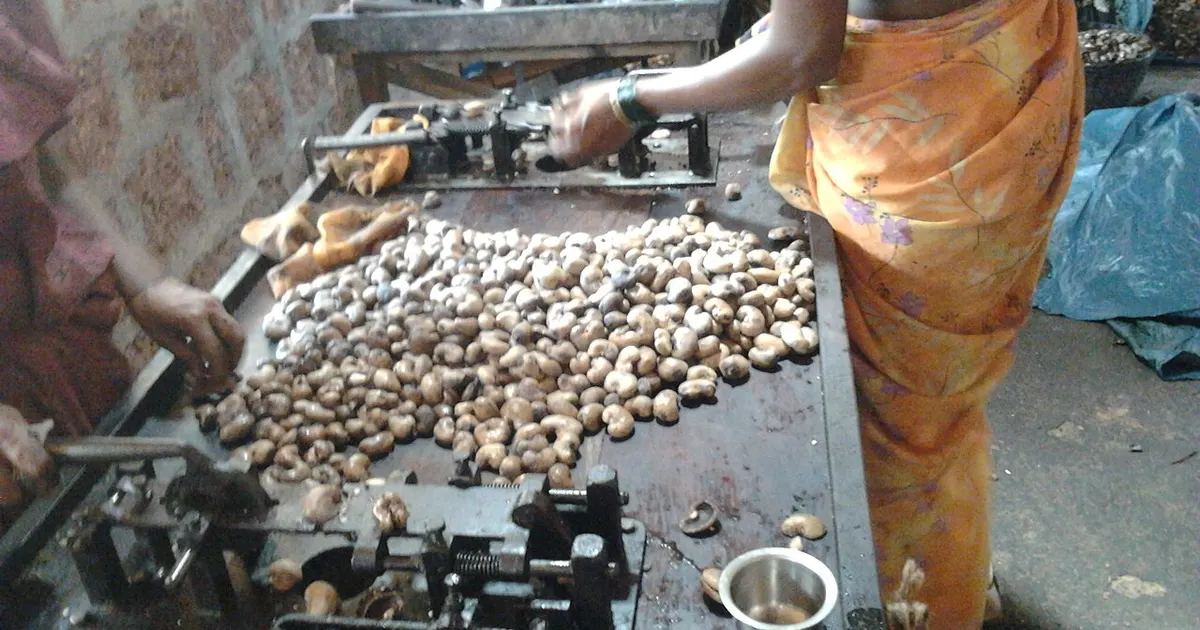
A cashew factory visit is worth the trip when you can follow one lot from raw nut to packed carton and see the records behind it. The walk takes half a day or more, and the aim is simple: leave with evidence you could not get from a sample and a certificate. This guide gives you the route through a Vietnamese plant, the question to ask at each stop, how to run the visit by video and what a visit cannot prove.
Decide what the visit is for
A visit costs time and money for both sides, so name the decision it supports.
- Before a first container. Often not needed. A counter sample, verified certificates, references and an independent pre-shipment inspection can carry that decision. The processor checks cover the paper side.
- Before a repeat programme. Worth it. A plant that will run your spec every month should be seen once.
- Before private label or a retailer listing. Worth it, and often asked for by your customer.
- After a failed lot. Worth it, but go with the claim file open and a specific list of questions.
If you import into the United States, an onsite audit by a qualified auditor is also one of the supplier verification activities in 21 CFR 1.506, and the rule expects one before first import and at least annually only for hazards that your analysis says a supplier controls and that could cause serious harm. Whether that applies to your cashew supply is a decision for your food safety plan and a qualified person, not for this page. A buyer visit is not a substitute for that audit unless your auditor says so.
Before you go
- Name the lot. Ask the plant for a lot of your grade that will be in production or in the warehouse on the visit day. A plant showing you a clean sample room and no live lot is showing you a showroom.
- Send the agenda. List the stops below and ask who will walk you through each. Ask for the plant layout or a floor plan.
- Ask for the hygiene rules. Footwear, hair and beard covers, hand washing, and jewellery. The personnel rules in 21 CFR 117.10 are the yardstick: clean outer clothing, hand washing, no unsecured jewellery and belongings away from exposed food. A plant that applies them to you shows how it treats them every day.
- Take a checklist and a camera. Ask first whether photography is allowed. Plants often restrict it near customers’ packs.
- Bring your spec. The spec sheet lets you ask about your own limits instead of generalities.
The route, stop by stop
Follow the product in order. The flow shows where kernels wait and where hands touch them.
| Stop | What to look at | What to ask |
|---|---|---|
| Nut intake and yard | Raw nuts on pallets or sacks, off the ground, covered, dry | Where do the nuts come from, how long do they wait, how is the lot kept apart? |
| Steaming and shelling | Machine state, shell and kernel kept apart, cleaning between runs | Which lines are in use for my grade? What is the breakage target? See automatic or manual shelling. |
| Drying and peeling | Drying times and temperatures posted, kernels spread evenly | How is moisture checked after drying? See drying and peeling. |
| Grading and colour sorting | Sorters running, hand graders under good light, reject bins | Who sets the count and colour limits, and who checks them? See colour sorting and hand grading. |
| Foreign matter control | Metal detector, its test pieces and rejects | How often is it tested, and where do rejects go? See metal detection. |
| Packing | Carton and liner state, seal, lot code printed on the carton | Is the CO2 mix or vacuum checked? See vacuum packing and CO2. |
| Warehouse | Pallets off the floor, no pests, temperature and humidity records | How is stock rotated? What is the storage temperature? |
| Laboratory and QC office | Moisture balance, sample retention, reference samples | Who releases a lot? See who releases your lot. |
What the regulations and trade standard give you to look for
You do not need to be an auditor, but a few published lines give your eyes something definite.
- Pests. In the United States preventive controls rule, 21 CFR 117.35(c) says pests must not be allowed in any part of a food plant and that the plant must keep them out of manufacturing, packing and holding areas. Look for bait stations in sensible places, gaps under doors and dead insects at floor edges. See fumigation and pest control.
- Dry surfaces. The same section says food-contact surfaces used with low-moisture food must be clean, dry and sanitary before use, and fully dry after wet cleaning. Cashew kernels are a low-moisture food, so a wet table at the packing line deserves a question.
- Moisture and packing. The AFI cashew specification sets moisture at 3 to 5 percent by a loss on drying method, asks for new, clean, dry, leak-proof containers with an airtight seal, and lets only food-grade CO2 be used, at a minimum mix of 60 percent with the balance nitrogen.
- Storage. The same specification cites the University of California postharvest guidance of 0 to 10 degrees Celsius at 55 to 70 percent relative humidity as the optimum for tree nuts. A warehouse will not always match that. Ask what it does keep, and what the records show.
- Labelling and traceability. The AFI specification asks for cartons marked with the producer or packer, grade, weights, origin, allergen and lot, production and date codes, and a packing list that details the codes and quantities.
Need a price for this grade? Request a quote
The trace test
This is the single most useful exercise on a visit. Pick a packed carton at random, or a sealed one in the warehouse, and read its lot code. Then ask to see, in order:
- The packing record for that code.
- The grading or sorting record for the same lot.
- The raw nut intake record the lot came from.
- The laboratory results for the lot.
A plant with a working trace system finds the four records in minutes. A plant that says the person who knows is away is giving you the answer. Do this with your own lot code if one is in the warehouse.
Running the visit by video
A well-run video visit can cover most of the route.
- Schedule it on a production day and ask for a live walk, not a recorded tour.
- Choose the order of stops yourself and ask for the camera to stay on the product at each one.
- Ask someone to film the label and lot code on a packed carton, and to hold a kernel sample from the line next to a ruler or a scale.
- Ask for the trace test on screen: the four records for one lot, shown as files or paper.
- Pair it with a sealed sample sent by courier. Smell and snap, the signs of rancidity and moisture, do not cross a video link.
See the sample and approval process for the sample routine.
What a visit cannot prove
A visit shows one day. It does not show the previous peak season, the raw nut quality three months from now or how the plant behaves when a lot goes wrong. It also does not show which kernels will fill your container if the plant buys from others, so ask for the contract to name the packing plant.
Treat the visit as one input beside certificates you verified yourself, test results from a laboratory you chose and references from buyers who have had a problem. A good-looking floor and a missing trace are a worse sign than the reverse.
After the visit
- Write down what you saw the same day, with photos, against your checklist.
- Send the plant a list of any gaps and a date by which you want a written reply.
- Put what you agreed into the contract: the packing plant, the inspection point, the release signatory, the pre-shipment sample and the remedy.
If you want direct quotes before you plan a trip, send your requirement with the grade, count, colour class, pack and destination, and note that you intend to visit. A plant that welcomes the request tells you something before you book a flight.
Sources
- AFI, Specifications for Cashew Kernels (updated September 2023): packing, labelling and traceability, moisture, storage and sampling
- 21 CFR 117.35, sanitary operations: pest control and food-contact surfaces (Cornell LII)
- 21 CFR 117.10, personnel requirements (Cornell LII)
- 21 CFR 1.506, supplier verification, onsite audit provisions (Cornell LII)
Frequently asked questions
Do I need to visit a cashew factory before a first order?
Not always. For a first container, a counter sample, verified certificates, references and an independent pre-shipment inspection can carry the decision. A visit pays off before a repeat programme, a private label line or any order where your own brand carries the risk. Decide the purpose first, then the format.
How long should a cashew factory visit take?
Plan a half day at the plant for the floor route and a records review, and add time for the warehouse and the laboratory. A shorter walk shows you the shelling hall and little else. Ask the plant to schedule the visit on a production day so lines are running, and to keep a lot ready whose records you can trace.
Can a video visit replace an in-person visit?
It can cover the route and the records if you set it up well: a live walk on a production day, you choosing the order of stops, and a request to film a packed carton label and a lot code. It cannot show smell or the feel of a kernel, so pair it with a sealed sample.
What should I look at first on the floor?
Start where the nuts arrive and follow the product in order: intake and storage, shelling, drying and peeling, grading, packing, then the warehouse. Following the flow shows where kernels wait, where people touch them and where records start. Ask to see the lot code on a packed carton and trace it back.
VietCashew supplies Vietnamese cashew kernels on one quote. We publish no prices, because a cashew quote is only valid for days. How an order runs and what we publish.
Need a price for this grade?
Send the requirement. We reply within 24 business hours with one detailed quote for the packed kernels.
Request a quote