Guides / Sourcing
Buying Cashews for Cashew Butter: Pieces, Scorched Grades and What Really Matters
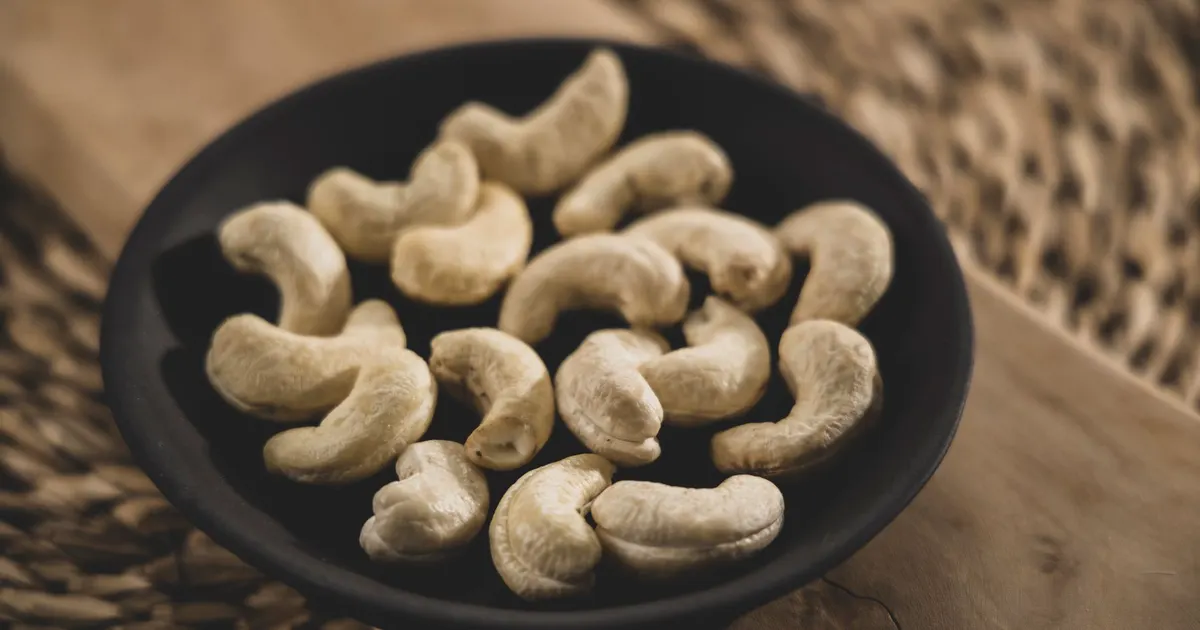
A jar of cashew butter has no kernel shape to show off. What it shows is texture, colour and taste, and those depend on the fat, the roast, the milling and the freshness of the kernel. That frees a butter maker from paying for the features that cost the most in the cashew trade: size and pale colour. The money belongs in the things the jar does show.
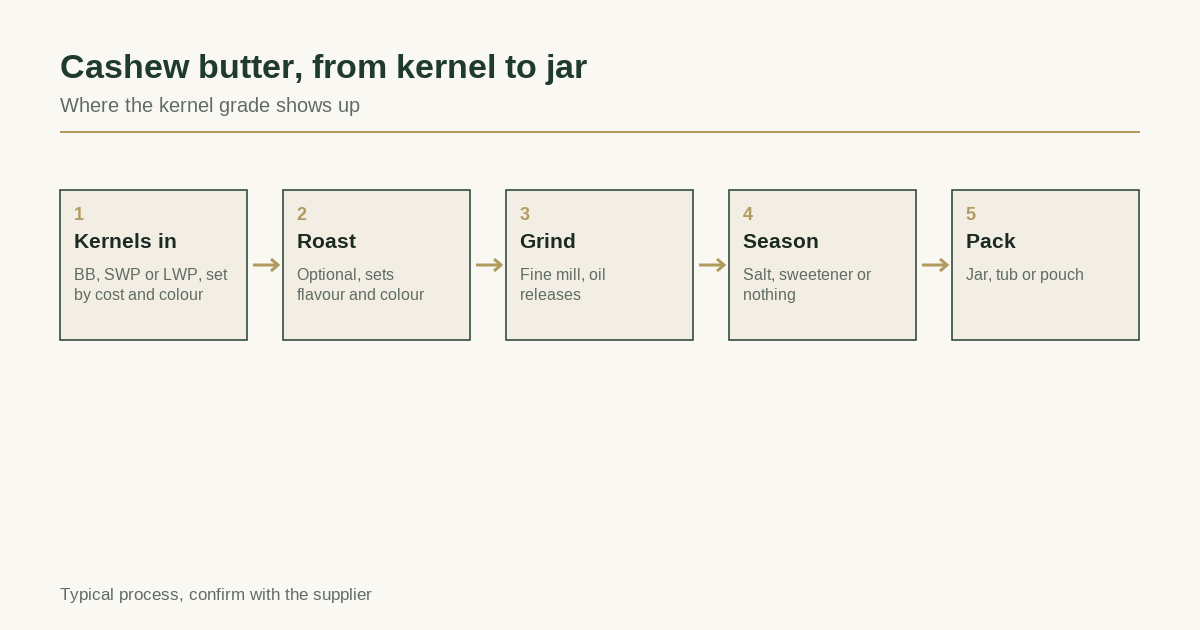
This guide explains which cashew grades suit butter, what to check in the kernel and how the choice interacts with roasting and milling.
Why size does not matter
Grinding turns any kernel into a paste. A large white whole and a small piece produce the same butter if the kernels are of equal quality and the process is the same. Because large whole kernels cost much more per kilo, a butter maker who buys them is paying for something the product destroys.
So the starting point is the cheapest grade that meets the quality limits. That usually means pieces or scorched wholes, not W240 or W180. Our guide to cashew pieces lists the piece grades and what each one is.
The grades that suit butter
Baby bits (BB). The smallest graded fragments. They are the lowest-cost usable form and mill easily. Check the fines and dust, since a high share of powder can signal old or poorly screened material.
Small white pieces (SWP). Slightly larger than baby bits, still low in cost and pale, which suits a light-coloured butter.
Large white pieces (LWP). Bigger fragments with a clear price advantage over wholes and a clean colour. A good choice if you want a pale butter without paying for whole kernels.
Scorched wholes (SW, SSW) and dessert wholes (DW). Darker kernels cost less than white wholes. In roasted butter the colour is hidden. In raw butter a dark kernel gives a tan or grey cast, so test it. Our guide to dessert wholes and LBW covers the darker classes.
Splits and butts. Cleanly split halves cost slightly more than pieces and are more than a butter needs.
Raw butter and roasted butter
Raw butter uses unroasted kernels, so the flavour is mild and a little sweet, and the colour is pale. It needs the cleanest kernels and the tightest controls, because there is no roast to mask flaws or to reduce microbial load. Ask whether the kernel has had a heat step, such as steaming at shelling, and what safety checks the plant runs.
Roasted butter uses kernels roasted by you or by the processor. Roasting adds flavour, darkens the colour and lowers moisture. It forgives colour variation in the starting kernel, which is why scorched and dessert grades suit it. Our guide to roasted cashews from Vietnam covers buying kernels already roasted.
What matters in the kernel
Fat content. Cashew kernels carry roughly 45 percent fat, and that fat is what makes the butter. Ask for a typical figure and the range between lots.
Moisture. Lower moisture gives a smoother, more stable butter and a longer shelf life. Set a maximum and the test method.
Free fatty acid and peroxide value. These measure how far the oil has broken down. A high value means a stale or rancid taste in the butter. Set limits and ask for the figures on the lot certificate.
Foreign matter. A shell fragment in a mill can damage the stones and end up in the jar. Our guide to foreign matter control covers it.
Aflatoxin. Grinding concentrates any contamination into a single batch, so test limits matter. See our guide to aflatoxin and food safety.
Freshness. Fresh kernels give a sweeter butter. Ask for the pack date and plan stock rotation.
Milling and stability
Butter makers mill in stages, from coarse to fine, and the final fineness sets the mouthfeel. Finer milling gives a smoother butter that separates more slowly. The kernel supplies oil to the mix as it grinds, and the mill warms as it works, which can drive off flavour or push the oil toward oxidation if it runs hot.
Some makers add a small amount of salt, a sweetener or a stabiliser. The cashew spec should leave room for these by being consistent: if the kernel changes between lots, the ratio that worked in the last batch may no longer hold.
Grades at a glance for butter
| Grade | Colour effect | Cost position | Note |
|---|---|---|---|
| BB | Pale | Lowest | Check fines and dust |
| SWP | Pale | Low | Easy to mill |
| LWP | Pale | Low to moderate | Clean colour for raw butter |
| SW, SSW | Tan to dark in raw butter | Low to moderate | Suits roasted butter |
| DW | Dark | Lowest whole | Roasted butter only, test first |
Need a price for this grade? Request a quote
Yield and cost per jar
A kilo of kernel gives close to a kilo of butter if nothing else is added, because grinding does not remove mass. So the cost of kernel per jar is easy to calculate: the kernel price per kilo multiplied by the fill weight, with a small allowance for loss in the mill and on the line. Compare grades on that basis and include any extra processing a darker grade needs, such as a longer roast to even out colour.
Packing and storage
Ground kernel has a lot more surface than whole kernel, so butter is more sensitive to oxygen. Keep the kernel in sealed vacuum packs until use, store it cool and mill soon after opening. Our guide to vacuum packing and CO2 flushing explains the formats.
Questions to put to a processor
- Which piece grades do you hold in volume, and what are the fines levels?
- What fat, moisture and free fatty acid figures do you see by lot?
- Can you supply roasted kernel to my profile, or raw only?
- What heat or safety step does the raw kernel go through?
- Can you send a counter sample of two grades for a butter trial?
A trial plan for switching grades
Changing the kernel in a butter that sells well is a risk, so test it in steps. Ask the processor for three to five kilograms each of two candidate grades, plus a reference of your current kernel. Roast and mill each under identical settings, and record the roast time, the mill temperature and the final fineness. Taste the butters side by side at the start, then after two weeks and after six weeks at room temperature, noting colour, flavour, oil separation and any off notes.
Measure what you can: moisture of the finished butter, and the oil layer on top after a set time. If your customer has a sensitive palate, add a small panel test. A change is safe when the new butter is indistinguishable at the start and holds up through the test period. If it is only slightly different, show it to your retailer before you commit to a full container, because a quiet change in colour or taste can still prompt a complaint.
Consistency lot to lot
Butter makers value consistency more than a small saving, since a butter that tastes different from the last jar costs trust. Pieces come from different kernel sizes and colour classes in each production run, so two lots of the same piece grade can differ in fat, moisture and colour. Ask the processor how it blends lots, whether it can reserve a standing supply from one run and how much notice it needs for a repeat order. Keep a sealed counter sample from each accepted lot so you can compare the next one against it, and write the key limits, such as moisture and free fatty acid, into the contract so that drift becomes a documented issue, not an argument.
If you sell the butter under a label that makes a claim, such as raw, roasted or no added oil, keep the kernel specification, the processor’s declaration and your batch records together. A claim is only as good as the paperwork that backs it, and a butter brand that can show the trail from kernel lot to jar answers a retailer audit in an afternoon.
Next step
If you make cashew butter, describe the process in the requirement: raw or roasted, the grades you will test and the volume you need. We price it with a Vietnamese processor that runs it, and you get one detailed quote. Send a requirement and we reply within 24 business hours.
Frequently asked questions
Which cashew grade is best for cashew butter?
Baby bits, small white pieces and large white pieces are the usual choices, because grinding hides the kernel shape and size. Scorched and darker whole grades also work if you roast, and they cost less than white wholes.
Do I need to roast cashews for cashew butter?
Not always. Raw butter uses unroasted kernels for a mild, creamy taste, and roasted butter uses roasted kernels for a deeper flavour and a darker colour. The choice sets the grade, the moisture target and the safety checks you need.
Why does cashew butter separate in the jar?
Oil rises because the ground kernel particles are heavier than the oil. Finer grinding, a stabiliser or a different blend of grades can slow separation. Moisture and free fatty acid also affect stability, so set limits for them in the kernel spec.
VietCashew supplies Vietnamese cashew kernels on one quote. We publish no prices, because a cashew quote is only valid for days. How an order runs and what we publish.
Need a price for this grade?
Send the requirement. We reply within 24 business hours with one detailed quote for the packed kernels.
Request a quote