Guides / Grades
Dessert Wholes and LBW Cashews: What the Darkest Whole Kernels Are For
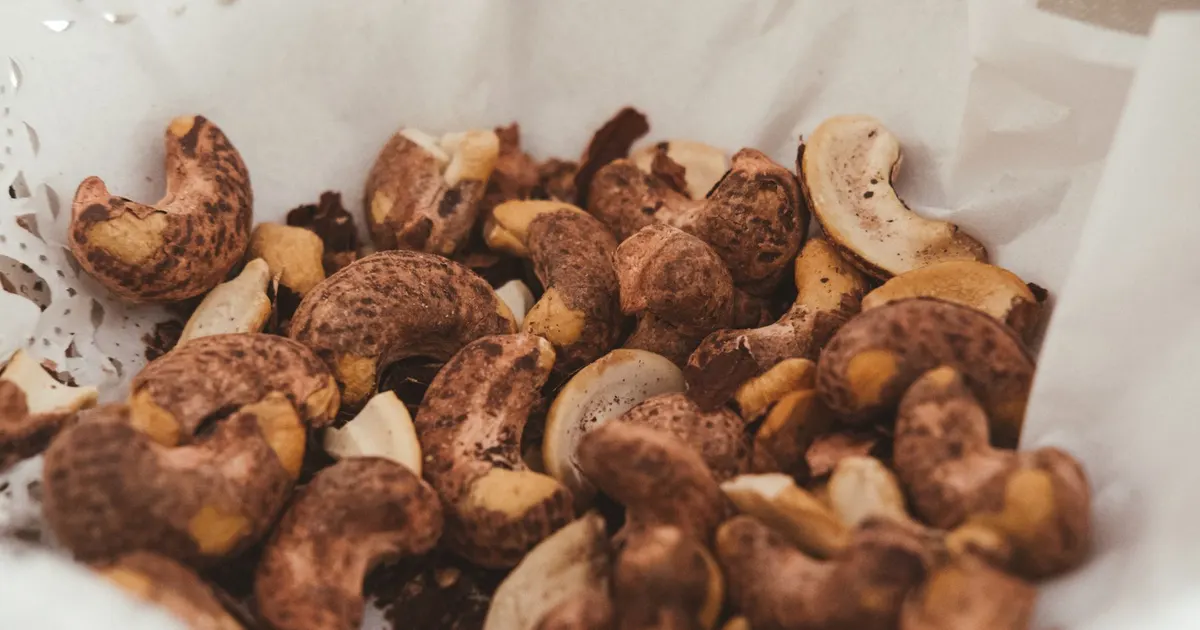
At the bottom of the cashew colour ladder sit the whole kernels that nobody photographs for a brochure. They are dark in places, speckled in others, and they cost noticeably less than a pale kernel of the same size. Dessert wholes and LBW are the names these kernels carry. A buyer who knows what they are can use them where appearance does not matter and save a meaningful amount. A buyer who does not can end up with a lot that cannot be sold in the intended pack.
This guide explains the lower colour classes, how they come about, where they fit and how to write them into a contract so there is no argument on arrival.
The colour ladder in short
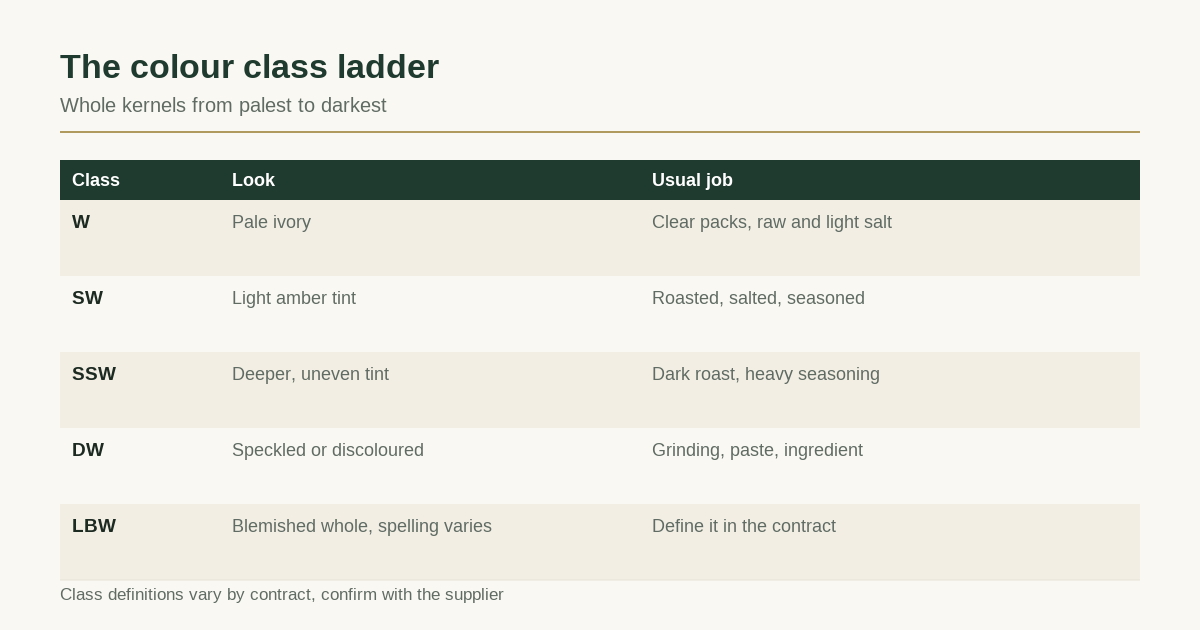
Cashew whole kernels are sorted by colour into four main classes, from palest to darkest. White wholes, coded W, keep the natural pale ivory. Scorched wholes, SW, have a light amber tint picked up in drying. Second scorched wholes, SSW, show a deeper and less even tint. Dessert wholes, DW, are deeply scorched, speckled or discoloured, and make up the lowest whole colour class. Our guide to scorched cashew grades covers the first three in detail.
LBW sits at the edge of this ladder. The code appears on some price lists for blemished wholes, but unlike W, SW and DW it is not used the same way everywhere. Some processors use it for lightly blemished kernels that fall between SSW and DW, and others use it for a separate blemish class. The safe route is to ask, in writing, what a given processor means by LBW and to treat the answer as part of the spec.
What makes a kernel dessert grade
Several things push a whole kernel into the darkest class.
Heat. Over-drying or a hot steaming stage tints the kernel. The deeper the tint, the lower the class.
Spots and speckles. Small marks from shell oil contact, bruising or mild insect or mould spots reduce the class even when the rest of the kernel is pale.
Uneven colour. A kernel that is pale at one end and dark at the other is graded by its darkest area.
Age. Kernels held for a long time can darken, especially if oxygen and warmth reach them.
None of these makes a kernel unsafe. A processor sorts for appearance and sets a separate limit for defects such as insect damage and mould, which are rejected regardless of colour. Our guide to cashew kernel defects shows which marks are cosmetic and which are not.
Where the discount comes from
Dessert wholes sell at a lower price because few buyers want them for retail. The kernel is the same size and the same shape as a white whole, but it cannot go into a clear pack. A plant collects them as a by-product of sorting white and scorched kernels, so supply is set by how the plant sorts, not by a decision to produce them. When the crop yields more dark kernels than the market wants, the discount widens.
The discount is real but it moves, so ask for DW and a higher class on the same enquiry. Our guide to price factors describes what drives the spread between grades.
Who can use them
Dessert wholes suit products where the kernel is hidden or transformed.
Cashew butter and paste. Grinding turns any colour into an even tan. A butter maker pays for fat and flavour, not for a pale kernel. Our guide to cashews for butter makers covers the grade choice in more detail.
Roasted and seasoned products. Roasting and heavy seasoning mask colour. Spiced, coated or candied nuts hide the kernel under the coating.
Industrial ingredients. Fillings, sauces, curry pastes, plant milk and ground meals use the kernel for flavour and fat.
Cooked food service. A curry or a stir fry cooks the kernel. Colour differences disappear.
Who should not use them
Anyone selling the kernel in a clear pack, a gift tin, a salad topping or a visible inclusion should avoid dessert wholes. The darker kernels stand out and a customer will notice. Raw and lightly salted snack lines also expose the colour, so they need white or scorched grades.
If you are not sure, put a bowl of the sample next to your intended finished product and look at the two together. The decision is usually clear.
The classes side by side
| Class | Look | Typical use |
|---|---|---|
| W | Pale ivory | Clear packs, raw and lightly salted snack lines |
| SW | Light amber tint | Roasted, salted and seasoned products |
| SSW | Deeper, uneven tint | Dark roast, heavy seasoning, ingredient use |
| DW | Speckled or discoloured | Grinding, paste, industrial ingredient |
| LBW | Blemished, definition varies | Define it in the contract |
Need a price for this grade? Request a quote
How to write it into a contract
Name the class by its code and write out its meaning. A line such as “DW, deeply scorched or speckled whole kernels, no insect damage, no mould” leaves less room for argument than “DW” alone. Add the size class, the moisture limit, the defect limits and the share of pieces permitted in a whole grade.
Ask for a photograph of the lot before shipment, and a counter sample from the same run. Keep a sealed duplicate for comparison on arrival. If your contract uses LBW or any non-standard term, attach the sample and photograph as part of the agreement.
Our spec sheet tool helps you build the document, and our guide to what to check on a cashew spec sheet lists the fields.
Risks to watch
Blended classes. Some lots are blended from several classes to hit an average colour. Ask whether the lot is a single class or a blend, and how the blend is controlled.
Hidden defects. A lot sold on a low price can hide higher levels of insect damage or mould. Insist on defect limits that are separate from the colour class and check them on arrival.
Shelf life. Darker kernels have usually seen more heat. Check the moisture and the smell, and plan to use the lot sooner, not later. Our guide to moisture and storage describes how to hold stock.
A worked example from a butter maker
A small butter maker buys W320 white wholes for a jar that sells at a premium price. It roasts the kernel, grinds it and adds salt. The jar is opaque. Nothing the customer sees depends on the colour of the starting kernel, but the maker still pays the white price. Replacing the white wholes with scorched wholes would already save money, and replacing them with dessert wholes would save more, provided the defect limits hold. The test is simple: roast a small batch from a DW counter sample, grind it and taste it against the current butter. If the flavour and colour are the same, the saving is real.
The risk to check is the roast. Darker kernels take colour faster and can over-roast if the profile is not adjusted. A short trial on your own roaster answers it. Ask the processor to send three to five kilograms for the trial, and record the roast curve for each batch so the comparison is fair.
What a processor will want to know
Processors sell dark classes more willingly to a buyer who describes the end use, because it confirms the kernel will not end up in a clear pack where a complaint could follow. Tell them what you make, whether the kernel is roasted or ground and what you need from the lot in terms of fat, moisture and defects. They can then match the class to the use and sometimes offer a better price for a regular offtake.
Finally, keep records of which classes you trial and what each saved. A short table of class, price, defects found and the result of the roast or grind test turns a one-off experiment into a buying rule your team can repeat when the market moves.
Where the deeper colour classes fit among all the grades, see our guide to which cashew grade to buy.
Next step
If a dark class can serve your product, say which one and describe the use in the requirement. We price it with a Vietnamese processor that runs it, and you get one detailed quote. Send a requirement and we reply within 24 business hours.
See also: the dessert wholes reference page sets out how the AFI, TCVN and UNECE texts define the lowest whole class.
Frequently asked questions
What are dessert wholes in cashews?
Dessert wholes, coded DW, are whole kernels that are deeply scorched, speckled or discoloured. They keep the full kernel shape and food safety limits of the better classes but fall in the lowest colour class, so they sell at a clear discount.
Are dessert wholes safe to eat?
Yes. The colour class describes appearance, not safety. A DW kernel must meet the same moisture, aflatoxin and food safety limits as any other class in the contract. The difference is shade and spotting, which matters in a clear pack but not inside a butter or a roast.
What does LBW mean on a cashew price list?
The code appears on some price lists for blemished whole kernels that sit below the standard colour classes, but the spelling out and the limits vary between processors. Do not buy on the code alone. Ask for the definition, a photograph and a counter sample, and write the definition into the contract.
VietCashew supplies Vietnamese cashew kernels on one quote. We publish no prices, because a cashew quote is only valid for days. How an order runs and what we publish.
Need a price for this grade?
Send the requirement. We reply within 24 business hours with one detailed quote for the packed kernels.
Request a quote