Guides / Compliance
How to Build a Foreign Supplier Verification File for Imported Cashew Kernels
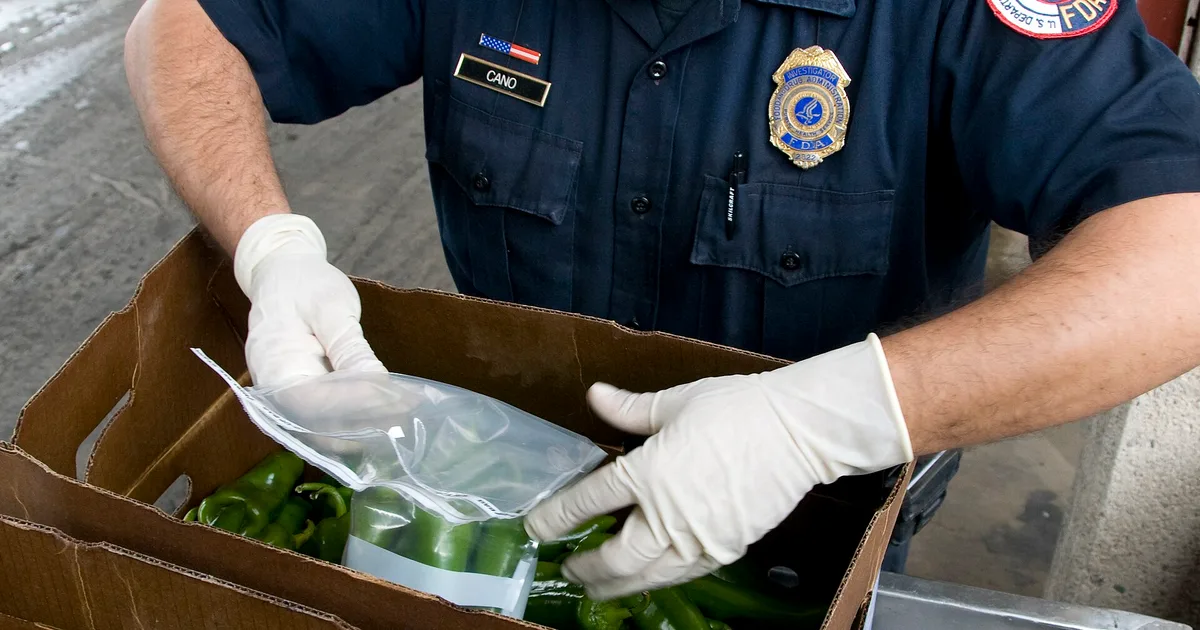
If you are the US owner or consignee of a cashew shipment, FDA requires a foreign supplier verification programme, or FSVP, for that food and that supplier. It is a written file: a hazard analysis, a supplier evaluation, verification activities, a corrective action routine and records. This post is part of our guide to cashew food safety for importers, and it walks through the file step by step for shelled cashew kernels, with the failure point of each step.
This is not legal advice. The file is yours. Your customs broker or a qualified individual should confirm it fits your business. The rule text below is from the eCFR copy of 21 CFR part 1 subpart L as of October 2026, and FDA’s FSVP page reads “Content current as of: 05/01/2026”.
Before you start
Who is the importer. Section 1.500 defines the importer as the US owner or consignee of the food at entry. If there is neither, it is the US agent or representative of the foreign owner, who must be designated before the food is offered for import (section 1.509(b)).
Who does the work. Section 1.503 says a qualified individual must develop the FSVP and perform each activity, and a qualified auditor must conduct any audit. Education, training or experience can qualify a person, and the person must be able to read the language of the records reviewed. If your supplier’s records are in Vietnamese, someone on your side must read them or you need a translation you can rely on.
What the file must achieve. Section 1.502 says the FSVP must give adequate assurance that the supplier produces the food to the same level of public health protection as the US preventive controls rules, and that the food is not adulterated or misbranded for major allergens. One FSVP is needed for each food, and each supplier is evaluated.
Two routes that shorten the file. Section 1.502(c) deems an importer compliant with the subpart, except for the entry identification in section 1.509, if it is a receiving facility under part 117 and either implements preventive controls for the hazards in the food, is not required to implement one, or has a risk-based supply-chain programme under subpart G of part 117. A snack brand that roasts or packs kernels in its own US plant should ask its qualified individual whether this applies. Separately, section 1.504(f) says that if the hazard analysis finds no hazard requiring a control, the supplier evaluation of section 1.505 and the verification of section 1.506 are not required. The analysis must still be written. Neither route is a reason to skip the question, and your broker or qualified individual should confirm which one fits.
Timing. Start before you sign the contract, because the evidence you need decides which processor you pick.
Step 1: write the hazard analysis
Section 1.504 requires a written analysis for each type of food you import, whatever the result. It must consider biological, chemical and physical hazards and any hazard that occurs naturally, is introduced by accident or is introduced for economic gain. The table shows how that list maps onto a cashew kernel. Whether each line needs a control is your qualified individual’s decision.
| Hazard type | Example for cashew kernels | Basis to cite | Evidence to ask the supplier for |
|---|---|---|---|
| Biological | Salmonella in a raw kernel that is not treated before it reaches the consumer | Codex code for low-moisture foods lists tree nuts in scope and Salmonella as the pathogen of concern | Validated kill step and monitoring record, or your own validated step |
| Chemical, natural toxin | Aflatoxin from mould on a susceptible raw material | FDA’s aflatoxin policy guide treats aflatoxin as a poisonous or deleterious substance | Certificate of analysis, sampling plan, retained sample |
| Chemical, residues | Pesticide or fumigant residue | Section 1.504 names pesticide residues | Residue report and fumigation record |
| Chemical, allergen | Other allergens reaching the kernel on a shared line | Section 1.502 and FDA allergen guidance | Line list and cleaning controls |
| Physical | Shell, stone, glass or metal fragment | Section 1.504 names stones, glass and metal fragments | Detector or X-ray records, test frequency |
Sources: 21 CFR 1.504; FDA CPG 555.400 and 555.300; Codex CAC/RCP 75-2015; FDA allergen Q&A, Edition 5.
You may rely on the supplier’s own hazard analysis if a qualified individual made it and you review it and document that review (section 1.504(d)). Failure point: copying a generic analysis for “tree nuts” that never mentions where your supplier’s kernels are treated. Write what is specific.
Illustrative example, not a real file. One filled row of the table above, for a kernel the importer sells to a snack maker who roasts it: “Hazard: aflatoxin, a natural toxin. Reasonably foreseeable: yes. Requires a control: yes. Controlled by: the supplier, through sorting and storage. Verification: certificate of analysis per lot with the sampling plan, retained sample, records review once a year.” The matching contract clause: “Supplier will provide the aflatoxin certificate of analysis, sampling plan and retained sample for each lot, and the validation summary of any kill step.” The numbers in the clause stay blank until your qualified individual sets them.
Step 2: evaluate and approve the supplier
Section 1.505 asks you to consider the hazard analysis, which entity controls each hazard and the supplier’s performance. Performance covers its food safety procedures, whether FDA has issued the supplier a warning letter or import alert and its food safety history: test results, audit results and how fast it corrected problems. You document the evaluation and the approval. You must re-evaluate when new information arrives and, in any case, at the end of every 3-year period.
In practice, ask for the plant’s HACCP plan summary, its last two audit reports with the closed corrective actions and its testing history for the hazards in your table. Check FDA’s import alert and warning letter lists for the supplier name yourself. Failure point: approving on a certificate alone. A certificate says a site was audited once, not how it handled the last failed lot.
Need a price for this grade? Request a quote
Step 3: choose verification activities
Section 1.506 lists four activities: an onsite audit by a qualified auditor, sampling and testing, review of the supplier’s food safety records and other appropriate activities. You choose which and how often, based on Step 2, and you write the choice down before the first import.
One rule has teeth. When a hazard is controlled by the supplier and could reasonably cause serious adverse health consequences or death, you must conduct or obtain an onsite audit before the first import and at least annually, unless you make an adequate written determination that other activities or less frequent audits are enough. Whether any cashew hazard meets that test is for your analysis to say; we do not claim it does.
Sampling and testing is the activity buyers reach for first. It works only when the sampling plan is written, the laboratory and method are named and the sample comes from the lot allocated to you. Failure point: a test plan with no stated sampling. FDA’s own Salmonella enforcement scheme specifies how many sample units it collects and how many composites it tests, so a plan that names neither is a weak basis.
Step 4: identify yourself at entry
For each line entry, section 1.509 requires your name, email address and an FDA-recognised unique facility identifier to be filed electronically with CBP. FDA’s page states that it recognises the DUNS number as an acceptable identifier and that importers have had to provide it since 24 July 2022. Failure point: a broker filing the entry with someone else’s identifier or none. Tell your broker the importer of record for FSVP purposes before the first shipment.
Step 5: records, corrective action and re-evaluation
Records must be signed and dated, legible and stored so that they do not deteriorate (section 1.510). Keep them for at least 2 years after you created or obtained them, and keep process and procedure records for at least 2 years after you stop using them. Offsite storage is allowed if records can be produced onsite within 24 hours of a request.
When a supplier turns out not to produce compliant food, section 1.508 requires prompt corrective action, which may include stopping use of that supplier until the cause is fixed, and it requires you to document what you did. Failure point: treating a failed lot as a commercial claim only. A failed lot is also a record that triggers a re-evaluation.
Raw kernels and customers who control the hazard
Section 1.507 relieves some importers of the supplier evaluation and verification steps for an identified hazard. One route is a food that could not be consumed without a control. Another is relying on a customer who is subject to the preventive controls rule and will control the hazard. In that case you must disclose in the documents accompanying the food that it is “not processed to control” the named hazard, and obtain written assurance from the customer every year. If you sell raw kernels to a processor who roasts them, this is the section to discuss with your broker. Other paragraphs of the section cover customers who are not subject to that rule, so read the whole section before you rely on it.
The file in one list
- A written hazard analysis for cashew kernels, signed and dated.
- A supplier evaluation and approval record.
- The written choice of verification activities with the frequency.
- Evidence of each activity performed: audit report, laboratory report, records review note.
- Your entry identifier and a note to your broker.
- Corrective action records and the last re-evaluation date.
Where to go next
Pair this file with the Salmonella and residue specs, because they feed Steps 1 and 3: see Salmonella and micro specs for cashew kernel buyers and pesticide residues in cashews. The import checklist works backwards from your shelf date. The full picture across markets is in our guide to cashew food safety for importers.
See also: The foreign plant has its own US duty, covered on our page about FDA facility registration for a cashew processor.
Sources
- eCFR, 21 CFR part 1 subpart L: Foreign Supplier Verification Programs for Food Importers
- FDA, FSMA Final Rule on Foreign Supplier Verification Programs for Importers of Food for Humans and Animals
- FDA Compliance Policy Guide Sec. 555.400, Aflatoxins in Human Food (June 2021)
- FDA Compliance Policy Guide Sec. 555.300, Foods, Except Dairy Products, Adulteration with Salmonella
- Codex Alimentarius, Code of Hygienic Practice for Low-Moisture Foods (CAC/RCP 75-2015)
- FDA, Questions and Answers Regarding Food Allergens, Edition 5 (January 2025)
Frequently asked questions
Who is the FSVP importer for a cashew shipment?
The US owner or consignee of the food at the time of entry. If there is none, it is the US agent or representative of the foreign owner or consignee, named in writing before the food is offered for import. The FSVP importer is not the foreign processor and not the freight forwarder by default.
Do I need an onsite audit of the cashew processor?
Not in every case. The rule requires an onsite audit before the first import and then at least annually only when a hazard is controlled by the supplier and could cause serious harm or death. You may replace that with another documented verification activity, if your written determination explains why it is adequate.
How long must FSVP records be kept?
At least 2 years after you created or obtained the record. Records of your processes and procedures, including the results of your evaluations and determinations, must be kept for at least 2 years after you stop using them. Offsite records must be retrievable within 24 hours of an FDA request.
Can a small importer skip parts of FSVP?
A very small importer, defined by average annual sales and imports below 1 million dollars over the previous 3 years, may use alternative requirements in 21 CFR 1.512. It must document its eligibility each year and obtain written assurances from the supplier. Check the definition before you rely on it.
VietCashew supplies Vietnamese cashew kernels on one quote. We publish no prices, because a cashew quote is only valid for days. How an order runs and what we publish.
Need a price for this grade?
Send the requirement. We reply within 24 business hours with one detailed quote for the packed kernels.
Request a quote