Guides / Quality
Testing a Raw Cashew Nut Lot at Intake: Nut Count, Cut Test and Outturn
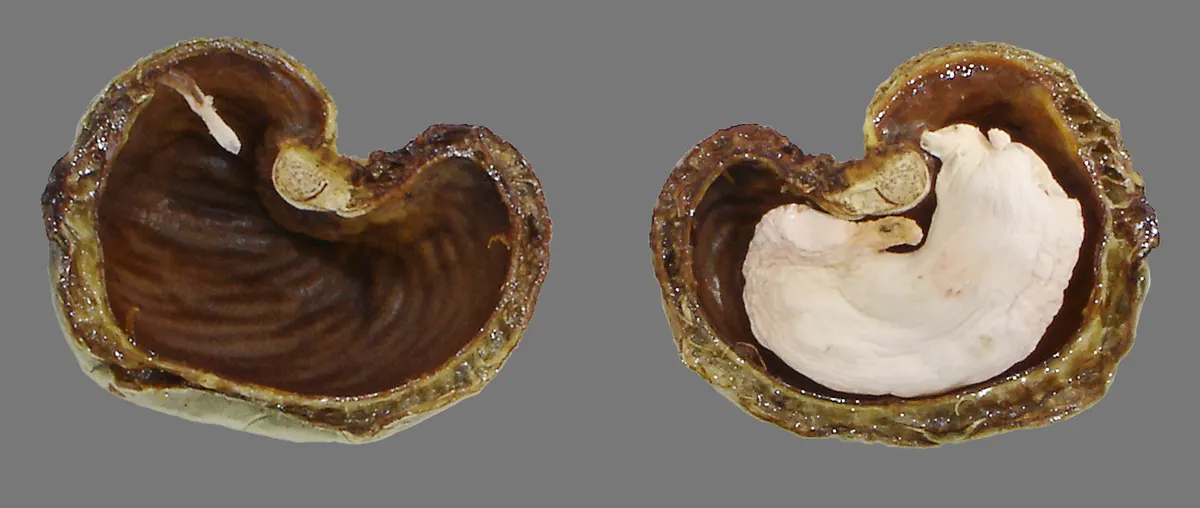
A raw nut lot can be accepted or rejected at the gate in about the time it takes to cut one kilogram of nuts. Weigh a sample, count the nuts, cut each one open, sort the kernels into classes and weigh the classes. The result gives you three numbers that decide what the lot is worth to your plant: nut count per kilogram, share of defective nuts and kernel outturn. Moisture is a separate oven test on a separate portion.
This guide is for the owner or QC lead of a cashew processor. We publish no prices. The method below comes from one public document, the final draft East African Standard DEAS 1000:2019 for raw cashew nuts. It is a regional draft written for African origin nuts, not a rule for Vietnam. We use it because it is the only public document we found that sets out a cut test step by step. Read it as a reference for writing your own intake specification.
Why test at the gate
A plant that buys raw nuts usually agrees the price of a lot before anyone has cut it open. The kernel you can make from that lot decides your margin, which is why our guide to raw cashew nuts and outturn treats outturn as the number behind the quote. A gate test gives you the figure while the seller is still there and the lot is still on the weighbridge. It also gives you a record to put next to the contract if there is a dispute later.
Three habits make the result useful:
- Test every lot the same way, by the same method, so lots can be compared with each other.
- Keep the cut results and a retained sample, labelled with the lot, the origin and the date.
- Agree the method with the seller in the contract, not at the gate.
What the standard defines
DEAS 1000:2019 gives working definitions you can copy into an intake sheet. Total defective is the percentage by weight of damaged nuts in the raw nuts supplied, void and rotten nuts being named examples. Kernel output ratio, also called shell out-turn, is the minimum quantity of good kernels obtained after shelling per 80 kg of raw nuts, expressed in pounds per 80 kg bag or in kilograms per 80 kg. Nut count is the maximum number of in-shell nuts per kilogram at the stated moisture level.
It also defines six classes of nut by what the cut shows:
| Class | What the standard says about the kernel |
|---|---|
| Wholesome | Well developed and completely fills the shell |
| Spotted | Dark or brown stains |
| Immature | Partly developed or does not fill the shell |
| Partial damaged | Partly destroyed |
| Rotten | Mouldy or brown |
| Void | The shell is empty |
The class list matters because the three sorting decisions you make with a knife, wholesome against spotted against rotten, are the ones that move the outturn.
The limits it sets
Table 1 of the final draft sets the limits every raw nut lot must meet, and Table 2 grades the lot.
| Characteristic | Limit in DEAS 1000:2019 | Method named in the standard |
|---|---|---|
| Moisture and volatile matter | 10.0 percent (m/m), maximum | ISO 665 |
| Foreign matter | 0.5 percent (w/w), maximum | ISO 658 |
| Total defective | 10.0 percent (w/w), maximum | Annex A |
| Grade | Kernel output ratio, minimum | Nut count per kg, maximum |
|---|---|---|
| Grade 1 | 48 lbs per 80 kg | 200 |
| Grade 2 | 44 lbs per 80 kg | 220 |
| Grade 3 | 36 lbs per 80 kg | 240 |
Two cautions. First, the document is a final draft and the cover says so, so check whether a final edition has been issued before you cite it in a contract. Second, the standard says that where a national regulation on raw nut grading exists, that regulation applies instead. These are figures for East African origin. A West African or Cambodian lot may be sold on a different outturn basis, and our note on raw nut origins explains why a plant should not assume one origin behaves like another.
The cut test, step by step
Annex A of the draft lists the apparatus: a calibrated balance, scissors designed for cashew shelling, a scooper and gloves. The procedure has two parts.
Nut count. Weigh one kilogram of the sample and count the nuts in it.
Total defective and outturn. Weigh a second one kilogram portion, then:
- Cut each nut, shell and kernel together, into two halves with the scissors.
- Clean the scissors after each cut.
- Separate the kernels from the shell. Kernels that are mouldy, brown, moth-eaten, empty or stunted are weighed with the shell.
- Sort the rest into the classes above: wholesome, spotted, immature, partial damaged, rotten and void.
- Weigh each class.
The total defective percentage comes from the weight of the damaged classes against the weight of the sample. Outturn in pounds per 80 kg is calculated from the class weights and a factor of 0.176. As we read the annex, the calculation takes the weight of wholesome kernels plus half the combined weight of the spotted, immature and partial damaged kernels, then multiplies by 0.176 for a one kilogram sample in grams. The copy we read has the formula in a layout that does not extract cleanly, so confirm it against the full text of the standard before you build it into a worksheet.
The factor is simple arithmetic: 80 kg is eighty times a one kilogram sample, and a kilogram is 2.2046 pounds, so one gram of kernel in the sample is about 0.176 pounds per 80 kg.
An illustration with invented numbers, arithmetic only and not plant data: if a one kilogram sample gives 220 g wholesome, 40 g spotted, 20 g immature and 10 g partial damaged, the calculation is 220 plus half of 70, which is 255, times 0.176, which is about 44.9 lbs per 80 kg. That would meet the Grade 2 minimum of 44 in the draft and fall short of Grade 1.
Wear gloves and treat the shell contents with care. The photo above shows why: the liquid visible at the cut edge of a fresh shell is the shell resin.
Need a price for this grade? Request a quote
Moisture and foreign matter are separate tests
The cut test does not measure moisture. The draft names ISO 665 for moisture and volatile matter and ISO 658 for foreign matter. The current edition of the first is ISO 665:2020, whose scope is the determination of moisture and volatile matter in oilseeds. For the kernel side of moisture testing, see our reference on cashew moisture test methods.
The draft cites ISO 542 for sampling. ISO withdrew ISO 542:1990 on 2 August 2022 and ISO 21294:2017 is the revision, so a plant writing a new sampling plan should look at the current edition and not copy the old reference.
What to do with the result
A test only helps if the plant knows in advance what each result triggers. A workable sheet has four lines:
| Result | Action to write down beforehand |
|---|---|
| Within the contract limits | Accept, store by lot, keep the retained sample |
| Outturn below the contract basis | Record, tell the seller the same day, follow the contract price adjustment or claim route |
| Defectives or foreign matter above limit | Hold the lot separate from accepted stock until the seller responds |
| Moisture above limit | Dry or segregate before the lot goes into storage |
None of this replaces the contract. If the contract is silent on the test method, a later disagreement becomes an argument about whose scissors and whose scale were used. Our guide on pricing kernels forward when raw nut costs move covers the other end of the same exposure, and the note on who releases a cashew lot covers the finished kernel side.
What a gate test cannot tell you
A one kilogram cut sample tells you about the nuts in that sample. It does not tell you the lot is uniform. Nuts at the top of a bag, nuts at the bottom of a container and nuts that sat near a leaking roof can differ. We found no public rule for how many bags to sample, so write your own plan, apply it every time and keep the retained samples so that an old lot can be cut again if needed.
The kernel yield is also not the only thing that decides grade quality. Large whole kernels depend on nut size, drying and shelling, which are covered in our notes on automatic against manual shelling and drying and peeling. The AFI kernel specification sets what the finished kernels must meet, including a moisture range of 3 to 5 percent, and that is the number your buyer will check, not the raw nut moisture.
Talk to us
If you process cashew kernels for export and want work requests whose grade, volume and certificate needs fit what you run, read how it works on our processor page and register there. We reply within 24 business hours. Standards and trade rules change, so check the dates on the sources below before you rely on a figure.
Sources
- EAC, DEAS 1000:2019 Raw cashew nut, Specification (final draft, East African Standard, as notified to the WTO)
- EVS, EVS-EN ISO 665:2020 Oilseeds, Determination of moisture and volatile matter content (scope)
- Genorma, ISO 542:1990 Oilseeds, Sampling (withdrawn 2 August 2022, replaced by ISO 21294:2017)
- AFI, Specifications for Cashew Kernels (updated September 2023)
Frequently asked questions
What is a cut test on raw cashew nuts?
A cut test opens a weighed sample of in-shell nuts, usually one kilogram, and sorts what is inside into classes: wholesome, spotted, immature, partly damaged, rotten and void. The weights of those classes give the kernel outturn and the share of defective nuts. DEAS 1000:2019 describes the method in its Annex A.
What outturn does the East African raw cashew standard require?
The final draft DEAS 1000:2019 sets a minimum kernel output ratio of 48 lbs per 80 kg for Grade 1, 44 for Grade 2 and 36 for Grade 3, with a maximum of 200, 220 and 240 nuts per kilogram. It also caps moisture at 10.0 percent, foreign matter at 0.5 percent and total defective nuts at 10.0 percent.
Is the DEAS 1000 limit binding on a Vietnamese plant buying raw nuts?
No. It is an East African draft standard for raw nuts from that region. A plant can use it as a reference when it writes its own intake specification, but the limits that apply are the ones in the purchase contract with the raw nut seller. Agree the method and the limits in writing before the first lot arrives.
How many nuts do I need to cut for a valid result?
The standard works on a one kilogram portion drawn from the lot under its sampling reference. It does not say how many bags to open. We found no public rule for a number of cuts, so write your own sampling plan and apply it the same way to every lot.
VietCashew supplies Vietnamese cashew kernels on one quote. We publish no prices, because a cashew quote is only valid for days. How an order runs and what we publish.
Need a price for this grade?
Send the requirement. We reply within 24 business hours with one detailed quote for the packed kernels.
Request a quote