Guides / Grades
Cashews With the Skin On: How the Unpeeled Kernel Is Specified and Sold
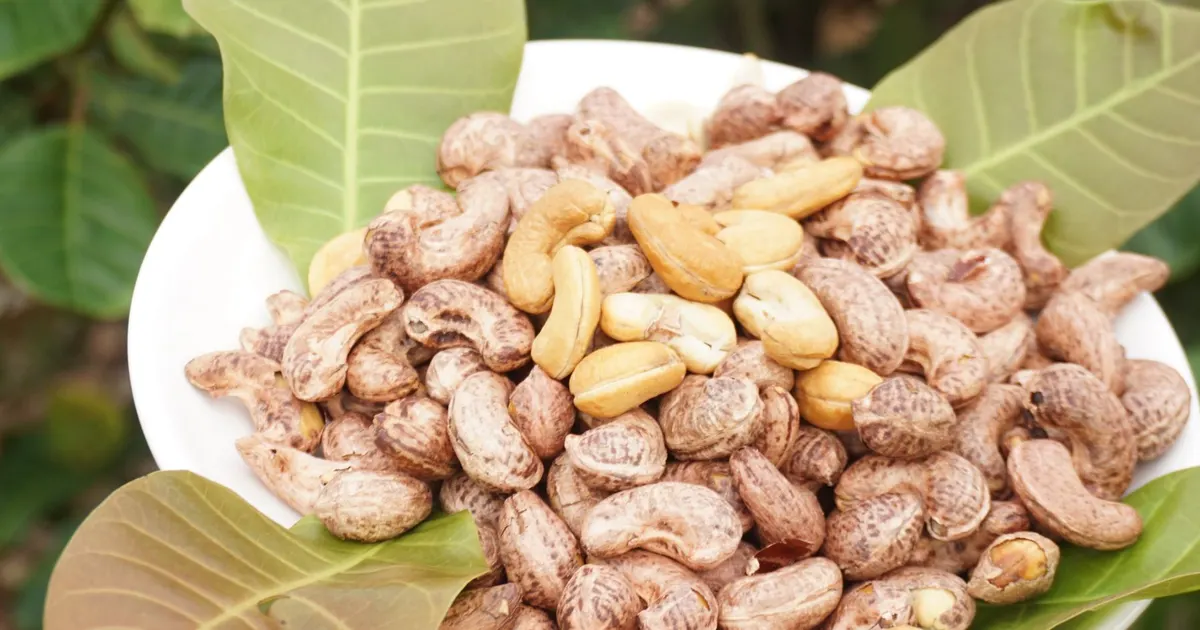
Most cashews on a shop shelf are pale ivory, because the thin brown skin was peeled off before packing. A smaller part of the trade moves the other way. Kernels are shelled, dried and sold with the skin left on. They look darker and more rustic, they cost less to process and they suit a set of products where the pale look is not the point.
This guide covers what skin-on cashews are, how they are specified, who buys them and what to confirm before you order.
What the skin is
Each cashew kernel is wrapped in a thin papery skin, called the testa, that ranges from light tan to reddish brown. After shelling and drying the skin shrinks and loosens, which is what makes peeling possible. In a skin-on lot, the plant stops before peeling and goes straight to grading.
Our guide to how cashews are processed shows where peeling sits in the line, and our guide to drying and peeling explains what peeling adds.
Why the product exists
Peeling is slow and skilled work, and it is a main source of breakage. A kernel that does not need to be peeled costs less to process and breaks less often. That gives a skin-on lot a lower cost base, and a processor can often pass part of it on.
A second reason is use. Some products want the skin. Roasted cashews with the skin on have a rustic look and a slightly nuttier, drier flavour that some customers prefer. The skin also hides small colour differences in the kernel underneath, which means a skin-on lot is more forgiving of scorching than a white grade.
Who buys skin-on cashews
Roasted snack makers. A roasted skin-on cashew looks natural and artisanal, and the skin roasts to a deeper colour. Brands with a rustic or health-led positioning use it.
Seasoned and coated nuts. The skin gives a coating something to grip and masks the kernel colour underneath.
Ingredient use. Where the kernel is chopped or ground and the skin colour does not matter, skin-on kernels cost less than white pieces of similar quality.
Regional markets. Some markets are used to eating cashews with the skin, and local buyers ask for it as a matter of habit.
Cooked food. Curries, stir fries and rice dishes cook the kernel. The skin softens in cooking.
Who should avoid them
Anyone selling a pale kernel in a clear pack should not buy skin-on, because the look is different by design. Raw lightly salted lines, gifts and premium toppings need peeled white or scorched kernels.
If your customers have an allergy or sensitivity concern about additional plant material, check with your own food safety team. The skin is part of the nut, and the allergen declaration for cashew does not change. Our guide to aflatoxin and food safety explains the limits that apply to the whole kernel, skin included.
How a skin-on lot is specified
A skin-on spec has the usual fields and a few extra.
Size. The count per pound still applies, though counting skin-on kernels needs the same method every time: weigh a pound, count the kernels. Skin adds a little weight and changes the count slightly against the white grade, so ask the processor which basis it uses.
Skin colour. State the range you accept, from light tan to red-brown, and whether a mixed lot is fine. Skin colour varies with the nut origin and the drying.
Skin integrity. Some lots arrive with skin torn or partly missing. State how much partial skin you accept.
Loose skin and dust. Skin sheds fine flakes in handling. Set a limit for loose skin and dust in the tin, because it accumulates at the bottom.
Defects. Spotted, shrivelled and insect-damaged kernels, and shell fragments, as in any grade. Defects are harder to see on a skin-on kernel, so ask how the plant checks them.
Moisture. The same limit as peeled kernels, with the same test method.
Comparison
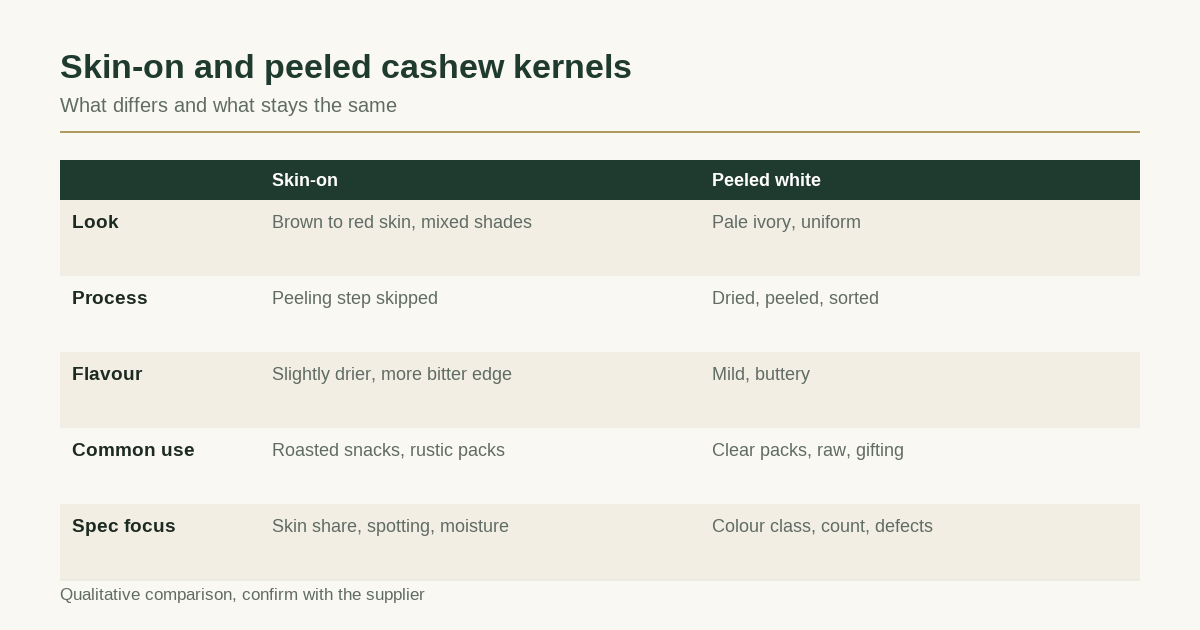
| Aspect | Skin-on | Peeled white |
|---|---|---|
| Look | Tan to red-brown skin, mixed shades | Pale ivory, uniform |
| Process | Peeling step skipped | Dried, peeled, sorted |
| Flavour | Slightly drier, more astringent | Mild, buttery |
| Common use | Roasted snacks, rustic packs, ingredient | Clear packs, raw, gifting |
| Spec focus | Skin share, loose skin, spotting | Colour class, count, defects |
Quality risks specific to skin-on
The skin can hold dust and shell oil residue from handling, and it can hide spots and insect damage that a white kernel would show. The skin also tends to hold moisture slightly differently from the kernel, so check moisture on the whole sample.
Because the skin contains tannins, it can add bitterness if the lot was dried too hot or stored long. Smell and taste a counter sample, roasted the way you plan to use it.
Insect pests can lay eggs in the folds of the skin, so storage hygiene matters. Our guide to fumigation and pest control covers what to ask.
Need a price for this grade? Request a quote
Packing and shelf life
Skin-on kernels pack the same way as peeled ones, in 25 lb vacuum tins or flexi bags. Shelf life depends on moisture, packing and storage, as with any cashew. Some buyers report a longer practical shelf life for skin-on kernels, because the skin shields part of the oil from air, but treat that as an observation to test, not a promise. Ask the processor for its stated shelf life and the conditions behind it. Our guide to moisture, storage and shelf life gives the general rules.
Questions to put to a processor
- What size and skin colour range do you run for skin-on kernels?
- How much loose skin and dust does a typical tin hold?
- How do you check defects under the skin?
- What is the stated moisture limit and shelf life?
- Can you send a counter sample roasted and unroasted?
Roasting skin-on kernels
Roasting changes how a skin-on kernel behaves, and the process is worth testing before you commit to a volume. The skin darkens faster than the kernel, so a profile set for peeled cashews can over-colour the skin before the inside is cooked. Start with a lower temperature or a shorter time and judge by cutting a kernel in half. The flesh should be evenly golden and crisp, with no pale raw centre, and the skin should be deep but not burnt.
Skin also sheds in the roaster. Loose flakes collect in the drum, in the cooling tray and at the bottom of the pack. Plan for a sifting or air-cleaning step after roasting if the finished pack must look clean. If you season the nuts, check that the coating sticks to the skin as well as it does to a peeled kernel, because some skins are slightly dusty and the seasoning can slip.
A simple trial plan
Ask for a counter sample of skin-on kernels in the size you want and a matching sample of peeled white kernels. Roast both under identical conditions, season them the same way and compare them in three ways: look, taste and shelf stability over a few weeks in a warm cupboard. Record the results in a table. If the skin-on version holds its flavour and look, request quotes for both and compare the cost per kilo of finished product, not per kilo of raw kernel.
Labelling and consumer expectations
Customers who have only seen peeled cashews may read a brown skin as a defect. If you sell skin-on kernels at retail, say so on the pack front, with a short line such as “roasted with the skin on”, and consider a window or an image that shows what is inside. Check the rules in your market on ingredient and allergen labelling, since the declaration stays the same for the kernel and its skin.
Skin-on lots are also worth a short look at the supply side. Fewer plants list them as a standard line, so availability and lead time can differ from the white grades. Ask early whether the processor holds a regular skin-on programme or makes it to order, and what minimum run that implies.
A skin-on lot needs its own spec lines; see our guide to which cashew grade to buy.
Next step
If skin-on kernels suit your product, say which size, skin colour and volume you need. We price it with a Vietnamese processor that runs it, and you get one detailed quote. Send a requirement and we reply within 24 business hours.
Frequently asked questions
What are skin-on cashews?
Skin-on cashews are shelled kernels that keep the thin brown skin, the testa, instead of having it peeled off. They go through shelling and drying but skip the peeling step, so they look darker and more rustic than white wholes.
Are skin-on cashews cheaper than white cashews?
Often yes per kilo, because peeling is labour and breaks some kernels, and skin-on lots skip it. The price still depends on size, colour of the skin, defects and the market, so quote skin-on and white wholes on the same enquiry to see the gap.
Do skin-on cashews taste different?
The skin adds a slightly drier, more astringent edge, which some buyers like in roasted snacks and others dislike in a mild product. Taste a counter sample roasted and unroasted before you decide, and check that the skin does not carry dust or bitter residue.
VietCashew supplies Vietnamese cashew kernels on one quote. We publish no prices, because a cashew quote is only valid for days. How an order runs and what we publish.
Need a price for this grade?
Send the requirement. We reply within 24 business hours with one detailed quote for the packed kernels.
Request a quote