Guides / Sourcing
Replacing a Cashew Supplier Mid-Year: Grade Matching and Re-Approval
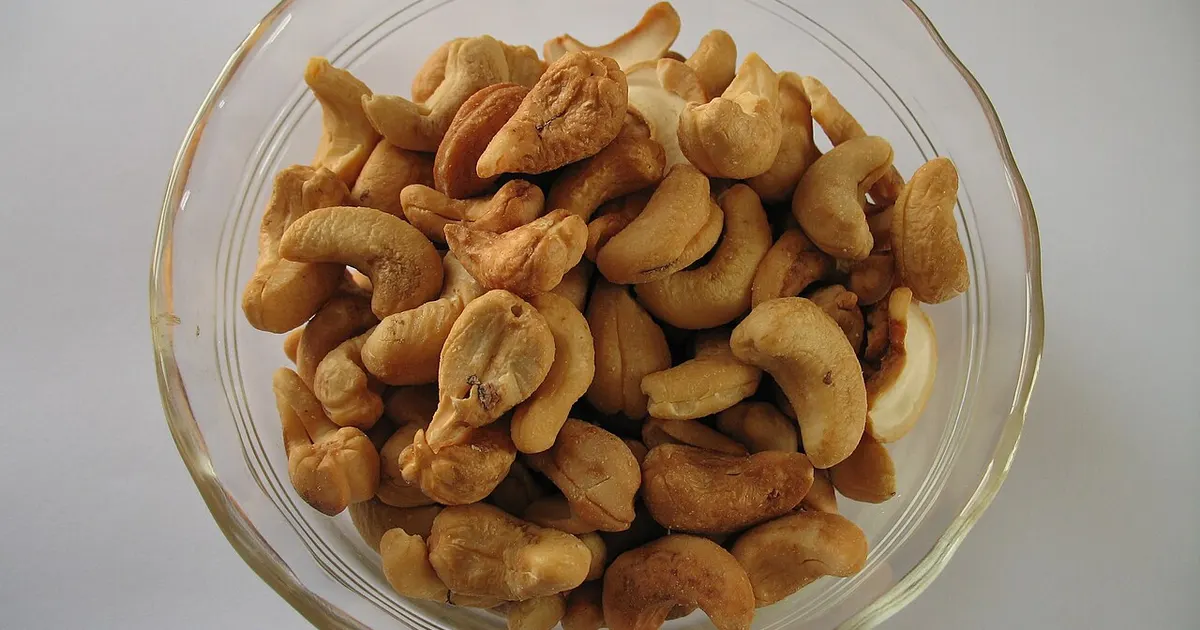
Replacing a cashew supplier mid-year is a matching job. The goal is that your customers receive the same product after the switch as before it, so the first task is to define what “the same” means in numbers you can test, and the second is to make the new supplier hit it on a trial lot. This guide gives the routine: build the reference, match on count, size mix, breakage and colour, test in the same laboratory, re-approve the plant and bring volume across in steps.
Why a switch goes wrong
Most failures come from approving on one attribute. A new supplier’s sample has the right count, the buyer signs, and the first container arrives with a different colour class, more pieces in the wholes or a roast that looks uneven. The old supplier’s output was never written down, so nobody can say what changed.
Two other causes are common. The sample was a best-of selection and not a drawn sample. And the new plant’s grade code means something slightly different from the old plant’s, which the buyer finds out in the customer’s complaint. See how to check a processor for the paper checks that come before this routine.
Step 1: write down what you actually received
Do this before you talk to the new supplier.
- Retained sample. Take the sealed, dated retained sample of a recent good lot from the old supplier, or draw one from stock. Store it cool and dark, as in the sample and approval process.
- Recent certificates. Collect the last several COAs and note count, moisture, free fatty acids, peroxide value and aflatoxin. See how to read a COA.
- Claims and complaints. What went wrong, and which attribute: colour, breakage, taste, foreign matter.
- Your customer’s spec. If a customer approved the old supplier by name or by sample, find out whether the switch needs the customer’s approval. This is a quality-system question for your own team.
- The contract terms. Incoterm, port, payment term, inspection point, remedy.
The result is a one-page “as delivered” spec. It will differ from the written spec in places, and the difference is what you must keep.
Step 2: choose the attributes that define a match
Use the AFI cashew kernel specification as the common language. It is a trade reference, not a law, and many buyers write it into contracts.
| Attribute | How to test it | AFI reference |
|---|---|---|
| Count per pound | Count whole kernels in a one-pound (454 g) composite sample | W320 is typically 300 to 320 per pound and W240 220 to 240 |
| Size mix | Percentage of the lower size grade by weight | Lower size grade not over 10 percent |
| Breakage | Percentage of broken kernels in wholes, from a 1,000 g composite | Not over 10 percent |
| Pieces in butts and splits | Percentage by weight | Not over 10 percent |
| Colour class | Visual, under full-spectrum light | First quality uniform white, light yellow or pale ivory |
| Defects | Percentage by weight in a 500 g composite | By grade, in the defects table |
| Roast appearance | Fry a sample in clear oil at about 149 degrees Celsius for 2 to 3 minutes | Uneven if over 7 percent of listed roast defects |
| Moisture, FFA, peroxide value | Same laboratory and methods | Moisture 3 to 5 percent, FFA max 1.5 percent, PV max 5 meq/kg |
The AFI method for grade says a well-mixed composite sample is examined, that only the most serious defect on a kernel is scored and that the same kernel is never scored twice. Ask the new supplier to follow the same method so that its numbers and yours are like for like.
The count and cut test shows how to run the count in a few minutes. For colour, see the kernel colour standard.
Step 3: get the new supplier’s sample right
Send the same brief you sent the old supplier, including the grade, colour class, packing, moisture and the methods. Then:
- Ask for a sample drawn from a real lot, not hand selected, with the lot and production codes.
- Ask for the plant’s COA for that lot, and read it as in the COA guide.
- Ask for the second sample to stay sealed at the plant for a dispute. The AFI specification asks for two sealed samples, one of which stays sealed for settling a quality dispute at arbitration.
- Put the new sample beside the retained reference and compare them blind if you can, with labels covered, under the same light.
Compare against the old supplier’s retained sample, not against your memory. If you have more than one candidate, run them together on the same brief and assess them in the same week.
Step 4: laboratory parity
Send the new sample and the retained reference to the same laboratory, to be tested by the same methods on the same day. The point is not the absolute number. It is whether the two differ by more than the method’s own scatter. Use the same method for moisture, as in moisture test methods, the same extraction route for FFA and peroxide value, and the same aflatoxin reporting limit.
If the two differ, find out why before approving: raw nut source, drying practice, storage age, blending.
Need a price for this grade? Request a quote
Step 5: approve the plant, not just the sample
A new plant is a new supplier approval. If you import into the United States, 21 CFR 1.506 requires written procedures to import food only from suppliers you have approved, with temporary use of an unapproved supplier only where necessary and appropriate and with adequate verification before importing. Under 21 CFR 1.505 the approval rests on an evaluation that covers the plant’s food safety procedures, its compliance history and its test and audit results, and you must promptly reevaluate when you learn new information about those factors. As of October 2026 this is the rule text; confirm what applies to your business with a qualified person.
In practice that means a file for the new plant with its certificates verified at source, its audit evidence, its test history and your decision to approve, dated and signed. See what FDA expects an importer to hold and verifying a BRCGS certificate.
Step 6: a trial lot with tighter sampling
Do not move the whole programme on the strength of one sample.
- Trial lot. A first container, or a share of a container, under your normal contract.
- Tighter sampling. The AFI sampling plan sets the number of 50 lb cartons to sample by lot size and says tightened inspection, which doubles the number sampled, is optional for reinspection or for lots with a history of failure. A first lot from a new source is a reasonable use. Collect 275 to 500 g per subsample and at least 3,500 g in total, as the plan says.
- Pre-shipment inspection. Ask for an independent inspection before loading, which the AFI specification asks for on all shipments. See the inspection report page.
- Acceptance rule. A delivery is acceptable if it is equal to or better than the approved pre-shipment sample, in the AFI wording. Write your own rule for colour, count and moisture beside it.
Step 7: handle the old supplier and the contract
Read the old contract for open quantity, notice and any minimum. The AFI form says shipment dates are fixed by the contract and that cancellation or modification needs a writing signed by all parties, so end things in writing. Keep the old supplier’s retained sample and your last COAs. If the trial lot fails, you will want a supplier to fall back on and a record to show what changed.
Where possible, run both suppliers in parallel for one or two shipments before you move volume. A parallel run costs a little in unit price and logistics, and it protects you from a gap in supply if the first lot from the new plant is rejected.
A switching checklist
- As-delivered spec written from the retained sample and COAs.
- Customer approval requirement checked.
- New sample on the same brief, drawn from a real lot, with codes.
- Count, size mix, breakage, colour and roast tested on the same method.
- Same laboratory, same methods, same day for the retained and new samples.
- Plant approval file complete and signed.
- Trial lot with a tighter sampling plan and pre-shipment inspection.
- Old supplier notified in writing, retained sample kept.
- Contract names the packing plant, inspection point and remedy.
If you want quotes from other processors on the same brief, send the requirement with your as-delivered spec, and compare what comes back against your reference sample first and the price second. The which grade guide helps when a change of grade is on the table.
Sources
- AFI, Specifications for Cashew Kernels (updated September 2023): sizing, tolerances, quality grades, sampling plan, grade method and roast test appendix
- AFI, Standard Import Contract (revised 21 September 2020), paragraphs 3 and 13
- 21 CFR 1.505, evaluation of foreign supplier performance and reevaluation (Cornell LII)
- 21 CFR 1.506, supplier verification and approved suppliers (Cornell LII)
Frequently asked questions
How do I make sure a new cashew supplier matches the old one?
Write down what the old supplier actually delivered: a sealed retained sample, recent certificates of analysis and the claims history. Then ask the new supplier for a sample on the same brief and measure count, size mix, breakage, colour and moisture against the reference, in the same laboratory and by the same methods.
Do I have to re-approve a cashew supplier if I switch?
Your own quality system and your customers decide that, and for a US importer the FDA foreign supplier verification rule says to evaluate and approve a foreign supplier before importing from it, and to document that. Treat a new plant as a new approval, not as an extension of the old one.
Should I move all my volume to the new cashew supplier at once?
Usually not. Start with a trial lot, ask for a tighter sampling plan on it and keep the old supplier's retained sample as the reference. The AFI specification allows doubling the number of cartons sampled for lots with a history of failure or on reinspection, and a first lot from a new source is a reasonable place to ask for it.
What do I tell the old cashew supplier?
Read your contract for notice and for any open quantity first. The AFI form says a contract can be cancelled or changed only in writing signed by all parties, so do not rely on a chat message. Tell the old supplier what is open, what is ending and what you need for the retained sample.
VietCashew supplies Vietnamese cashew kernels on one quote. We publish no prices, because a cashew quote is only valid for days. How an order runs and what we publish.
Need a price for this grade?
Send the requirement. We reply within 24 business hours with one detailed quote for the packed kernels.
Request a quote